Join our biotechnology webinar series to see how EBIC applies engineering biology to address pressing environmental challenges. Bringing together leading experts to explore real-world solutions for a healthier planet – don’t miss your chance to be part of the conversation driving environmental change!
Episode 1 - Microbial Engineering: Tools & Genetic Modification Techniques
Webinar 1 - Microbial Engineering: Toolsets & Genetic Engineering Methods
November 14, 2025 |13:30 - 14:30 (GMT)
Our first session - Microbial Engineering: Tools & Genetic Modification Techniques - features our EBIC experts Dr. David Lea-Smith, Associate Professor of Microbiology at the University of East Anglia, and Kawinharsun Dhodduraj, Researcher at Cranfield University.
With them, we review cutting-edge tools and tactics for microbial genetic modification, including practical insights and real-world examples. The webinar is also an opportunity for attendees to explore broader applications and significance of microbial engineering from a researcher’s perspective, and to engage directly with our experts via our live chat.
Join us as we explore the latest tools, techniques, and insights driving innovation in engineering biology.
Our Speakers
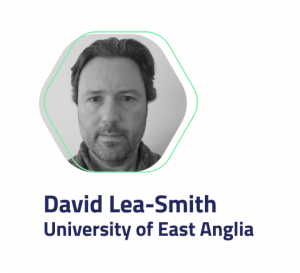
- Dr Lea‑Smith leads cutting‑edge work developing synthetic biology toolsets and genetic engineering methods for a wide range of bacteria, including cyanobacteria, applied to carbon capture, compound production and biotechnological innovation.
- He has pioneered systems such as modular Golden Gate cloning in cyanobacteria, and engineered bacteria for bioremediation and synthetic production.
- This webinar offers the chance to hear from a practitioner at the interface of microbial cell biology, engineering and biotechnology—bringing tools and methods to life.

- Kawinharsun Dhodduraj interest lies within using Metabolic Engineering tools for enhancing the production of platform chemicals.
- His current research work focuses on the production of 2,3-butanediol using various organic waste streams rich in fermentable sugars. This involves developing optimal pretreatment strategies, optimizing the production pathway through metabolic engineering and process intensification. His research emphasizes utilizing renewable carbon sources and developing low-carbon manufacturing technologies, aligning with multiple United Nations Sustainable Development Goals.
- Kawinharsun will also focus on the applications & impact of microbial engineering in his research field.
Missed the livestream? Watch the recording now:
Episode 2 - Biosurfactants for Oil Spill Response
Webinar 2 - Biosurfactants for Oil Spill Response
March 16, 2026|12:00 - 13:00 (GMT)
Our second webinar - Biosurfactants for Oil Spill Response - features our EBIC experts Tony Gutierrez, Associate Professor of Environmental Microbiology and Biotechnology in the School of Engineering and Physical Sciences at Heriot-Watt University and Dr Boyd McKew, Senior Lecturer in Environmental Microbiology at the University of Essex. We are also delighted to have Dr Rob Holland - Science, Technology & Stakeholder Engagement Manager at OSRL speaking at the webinar.
Our Speakers
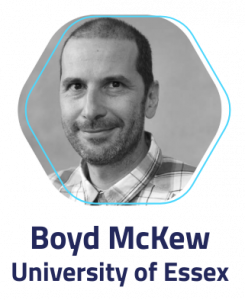
- Specialising in the bacterial biodegradation and bioremediation of crude oil and hydrocarbons - using transcriptomics and proteomics to identify genes and proteins involved in hydrocarbon degradation and biosurfactant production, in a range of environmentally relevant bacteria, with the goal of enhancing these pathways for bioremediation.
- Dr McKew also specialises in utilising synthetic biology to design and construct new biological devices and systems for enhanced bioremediation of marine oil pollution.
- Within EBIC Boyd is involved in our Cluster 2 activities, providing target genes to be used in parts of the research undertaken under Theme 2 focusing on environmental bioremediation.
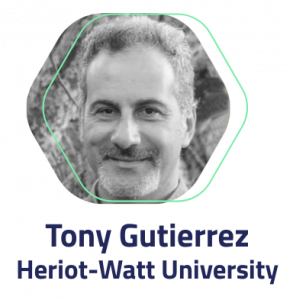
- Leads research in the field of Environmental Microbial Ecology and Microbial Biotechnology, with a focus to uncover the diversity and function of bacteria involved in the removal of anthropogenic pollutants (plastics, petrochemicals and other chemicals)
- Prof. Gutierrez’s work has led to the discovery of 3 novel cultivable bacterial species that use petrochemical pollutants as their sole source of food. Using a sophisticated molecular biology tool called DNA-based stable isotope probing (DNA-SIP), his lab has uncovered many other bacterial species that break down petrochemicals and plastic polymers. Another major focus of his work is on discovering new types of microbial bio-surfactants.
- Within EBIC Tony's role is to develop sustainable microbial bio-surfactants, and recombinant systems to produce these biomolecules, for applications to enhance the natural attenuation and bioremediation of environmental sites contaminated with toxic chemical pollutants. (Theme 2).
Dr Rob Holland - Science, Technology & Stakeholder Engagement Manager OSRL 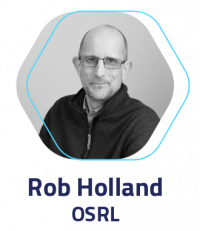
Rob has a background in marine biology and studied impacts of oils on rocky shore seaweeds for his PhD and is passionate about “bridging science to response” as part of OSRL’s academic outreach programme to communicate practical spill response through the lens of Net Environmental Benefits Analysis (NEBA) as a key tool that drives impact mitigation on marine habitats during a spill. Rob has worked at OSRL for the last 23 years.
Missed the livestream? Watch the recording now:
Episode 3 - Enzyme Engineering for PFAS Remediation
Webinar 3 - Enzyme Engineering for PFAS Remediation
June 2, 2026 | 12:00 - 13:00 (BST) - Register Here
Our third webinar - Enzyme engineering for PFAS Remediation - features our EBIC experts Dr Tao Lyu, Senior Lecturer in Green Technologies at Cranfield University and Dr Dhiman Chakravarty, Research Fellow at Cranfield University. We are also delighted to have Dr Natassja Bush, Chief Executive Officer at Inspiralis Limited speaking at the webinar. Inspiralis Limited is a leading Biotech company specialising in DNA modifying enzymes and their substrates, so we are delighted to have Dr Bush with us to to share her expertise and industry experience.
Our Speakers

Tao Lyu is a lecturer in Green Technologies and Environmental Engineering MSc course director at Cranfield University. He works at the intersection of environmental engineering, chemistry, and nanoscience, with a focus on sustainable wastewater treatment and natural water restoration. He has a track record focused on removing emerging organic contaminants (micropollutants) from water and wastewater using nature-based solutions, particularly through constructed wetlands. His expertise also includes advanced nanotechnology development, such as nanobubble technology, for natural water restoration, eutrophication control, harmful algal bloom removal, and sediment remediation.
Dr Lyu is also a co-lead on the Flexible Fund project - Harnessing AI-assisted synthetic Biology for enzyme engineering towards PFAS bioremediation and lead organiser for the recent workshop - PFAS and beyond which brought together researchers from across the globe to explore PFAS bioremediation and engineering biology/synthetic biology for environmental solutions.

Natassja Bush is Chief Executive Officer of Inspiralis, bringing over 15 years of experience in enzyme expression, purification, and complex biochemical assays. She completed her PhD and postdoctoral training at the John Innes Centre, specialising in DNA topology and enzyme mechanisms.
Having begun her career at Inspiralis as a scientist, Natassja returned in 2022 to take on senior leadership roles before becoming CEO. She oversees strategy, operations, and commercial performance, with a focus on translating cutting-edge science into practical biotechnology solutions. The company is expanding into enzyme engineering approaches to address global challenges, including environmental applications such as PFAS bioremediation.
Missed the livestream? Watch the recording now:
Episode 4 - Metal and Rare Earth Element (REE) Bioleaching
 Webinar4 - Metal and Rare Earth Element (REE) Bioleaching
July 29, 2026 | 12:00 - 13:00 (BST) - Register Here
For the fourth and final episode in this webinar series we are partnering with Elemental Engineering Biology Mission Hub to explore metal and REE bioleaching. With experts from EBIC, Elemental and Industry set to present this is not one to be missed. If you have an interest in, or want to learn more about, the role of microorganisms in extracting REE and metals then this is the session for you.
Our Speakers
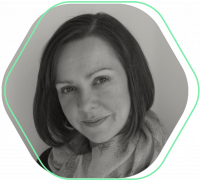
Louise Horsfall is Professor of Sustainable Biotechnology at The University of Edinburgh. She is interested in multidisciplinary challenges involving Biotechnology and Synthetic Biology, especially how these areas might help move us towards a more sustainable, circular economy. Louise was a founding member of the European Federation of Biotechnology (EFB) Bioengineering and Bioprocessing Division and now serves as an elected academic representative of the EFB’s Executive Board. She is a member of the European Synthetic Biology Society and SynBioUK Advisory Boards, EPSRC’s Strategic Advisory Team for manufacturing and circular economy, BBSRC Strategy Advisory Panel for advanced manufacturing and clean growth, and the Scottish Science Advisory Council – providing independent advice and recommendations on science strategy, policy and priorities to the Scottish Government.
The Horsfall group has published the most advanced bio-based process for lithium-ion battery recycling to date and authored, alongside leading battery experts, the roadmap for a sustainable circular economy in lithium-ion and future battery technologies. Their research has also combined the use of biosynthesised nanoparticles with cutting edge green chemistry techniques to demonstrate routes to improved catalysis.

Dr. Ana Santos is a Research Fellow in Geomicrobiology at the Natural History Museum, London, UK with over 10 years of experience in applied geomicrobiology, focusing on developing bio-based strategies for metal extraction, reducing environmental impact and advancing the transition to a circular economy. She holds a PhD in Environmental Biotechnology from Bangor University (UK) focused on bio-based technologies for valorisation of mine-impacted waters. Currently, she is a co-investigator on UKRI-funded ELEMENTAL Mission Hub exploring innovative engineering biology tools and techniques to improve bioleaching of mine and electronic wastes.
Industry Speaker:
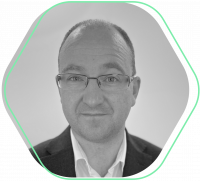
Sustainability Manager at Pensana Plc. Danny has experience across the ESG suite and has particular expertise in the areas of reporting and standards, risk, carbon, social and communities, climate change, and environmental risk. He leads Pensana’s ESG strategy and implementation and led the development of the business’ ESG strategy, the Pensana Blueprint for Sustainable Rare Earths, which outlines the business’s commitment to embedding sustainability into the challenge of sourcing and supplying rare earths.
Missed the livestream? Watch the recording now:
Want to be kept in the loop for events like this? Click the button below to become an EBIC member. Membership is completely FREE and will give you access to: