
Pilot-Scale Upstream Bioprocessing: 300L Bioreactor training FLEXBIO, Heriot-Watt University, Edinburgh 2026
As a molecular microbiologist, I tend to focus on the small things. Yet, a huge part of translating real science into applications for environmental clean-up includes taking a step back and looking at the big picture. EBIC is focused on translating synthetic biology from the lab to pilot scale and beyond, and therefore I attended the IBioIC scale-up workshop at Heriot-Watt University in June 2026. This was a four-day intensive course that included a mixture of hands-on lab experience, lectures, guest lectures and virtual reality! I felt that it has been one of the most valuable courses that I have attended recently.
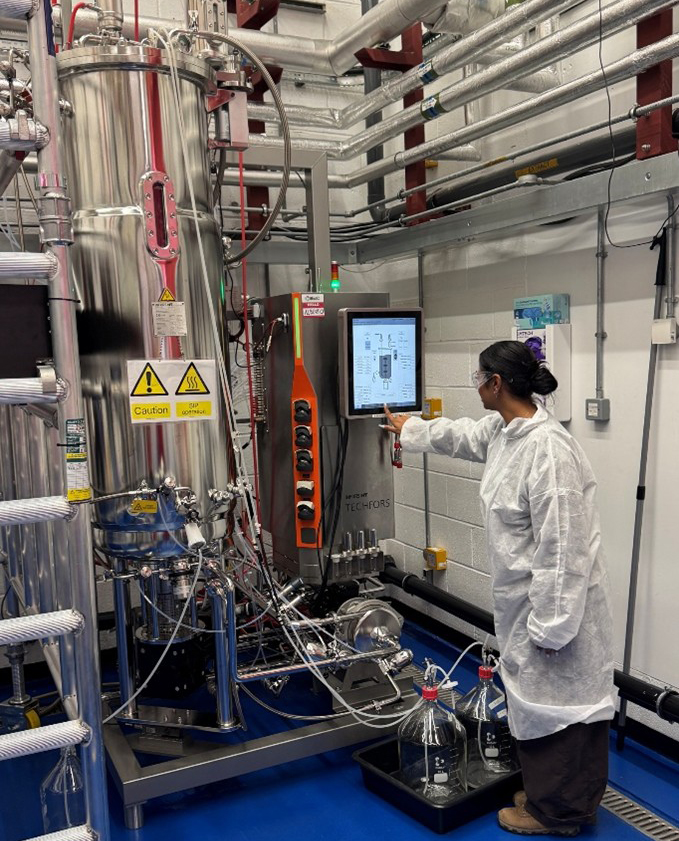
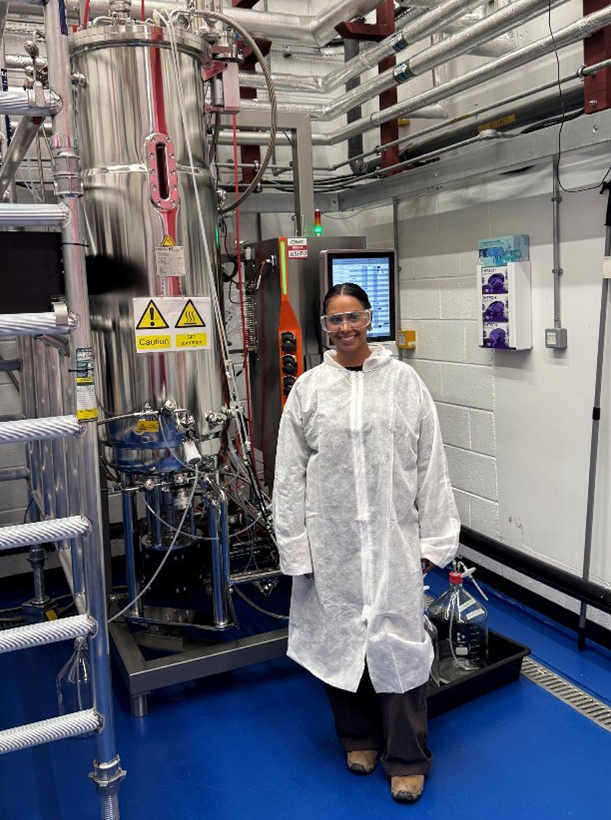
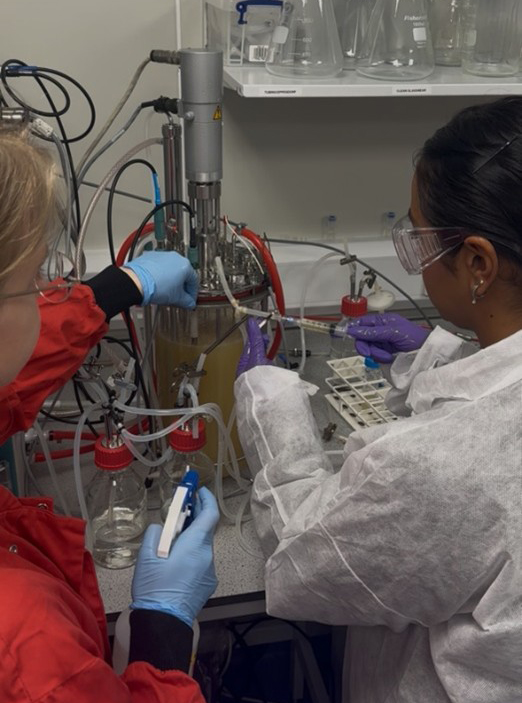
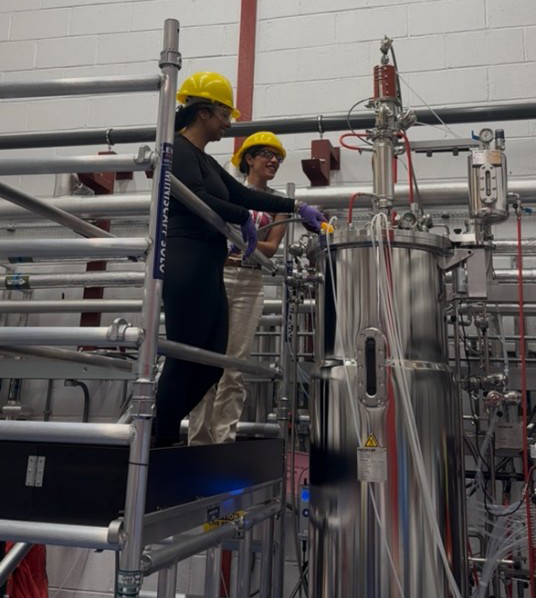
To translate the science from flasks to fermenters, we needed to understand what scale-up means, and we learnt how we can inoculate shake flasks and then a 7L bioreactor before using this culture to inoculate a 300 L bioreactor (with a 200 L working volume). Throughout the course, we learnt how to take samples, feed in nutrients and what it means to use sterile technique at pilot scale. As EBIC projects use genetically modified microbes, it was important to learn about sterilisation procedures (sterilisation-in-place, SIP) to maintain biocontainment and safe handling of the strains we work with at pilot scale. Working at this scale highlighted how even routine tasks become more challenging when contamination risks and process consistency must be managed across hundreds of litres.
Although engineering and math were subjects that I wanted to avoid, and hence continued my studies in biology, we were reintroduced to many mathematical equations. At first, they seemed complex, but the course leaders explained these concepts in a way that made sense. During the course, we considered the scale-up calculations, what oxygen transfer rates mean and why we need to consider mixing and aeration for our microbes to grow efficiently.
Moreover, we were lucky to have a session with RESILIENCE UK Medicines Manufacturing Skills Centre of Excellence. This involved VR headsets to practice setting up a bioreactor in sterile conditions and then how to prepare for work in a clean room – all of which were completely new to me.
I would thoroughly recommend EBIC members and beyond to attend this course to gain a better understanding of what it means to scale-up.
Further Attendee Feedback:
Author
Dr Yasmin Meeda, of EBIC & Cranfield Universtiy, on attending the IBioIC scale-up workshop at at Heriot-Watt University in June 2026.
Learn More
IBioIC – A networking and support organisation that connects industry, academia and government
I have just completed a 4-day training course on Pilot-Scale Upstream Bioprocessing at IBiolC (FlexBio, Heriot-Watt University, Edinburgh) and I would like to express my gratitude for this course. This 4-day intensive course was the best training I have ever received in terms of learning the steps involved in scaling microbial fermentation up to production volumes. Recently, a 300-liter bioreactor was installed at the Centre for Environmental Biotechnology (CEB) at Bangor University (Gwynedd, Wales), where I work, and this course not only gave me an opportunity to perform practical exercise from the laboratory to the pilot-scale but also gain confidence in my ability to work with this complex equipment.
The lectures were truly engaging thanks to the excellent presentation style and the many of opportunities to ask questions and discuss real life examples. I really appreciated that complex topics were broken down into clear and practical slides. The lectures, the laboratory sessions and hands-on exercises provided an effective and engaging learning experience. I have gained a wealth of knowledge and skills thanks to the trainers and instructors who have done a tremendous job, and I would like to thank them very much for sharing their expertise with us. – Dr Tatyana Chernikova, Bangor University
The course was really interesting, challenging, and helpful. Even though I was coming in with an engineering/pilot-scale rig background, rather than a biology background, the layout of the course helped me to catch up really quickly. They also tailored the course to our group, with more detail about scaling from flasks to benchtop reactors and then to pilot-scale.
Working hands-on with a 300L reactor really gave a good picture of the practical differences between even a 20L reactor and the peripheral equipment and facilities needed to use larger systems. It was great to learn about some of the practical challenges of scaling based on cell types and manufacturing limitations and from a wastewater processing standpoint, the lessons from the course challenged us to think about how we could take the principles learned from scaling to a batch bioreactor, and applying them further to a full-scale, continuous process.
There were also guest lectures looking into different tools like using fluid dynamics to predict how oxygen dissolves in a reactor and using AI to optimise experimental time. – Matt Andrews, Cranfield University

