
Engineering Biology for Environmental Solutions – Reflections
16–17 September 2026 | Southampton, UK
Two days bringing together emerging researchers, academic leaders, industry, policy and international perspectives to explore how engineering biology can help address environmental challenges.
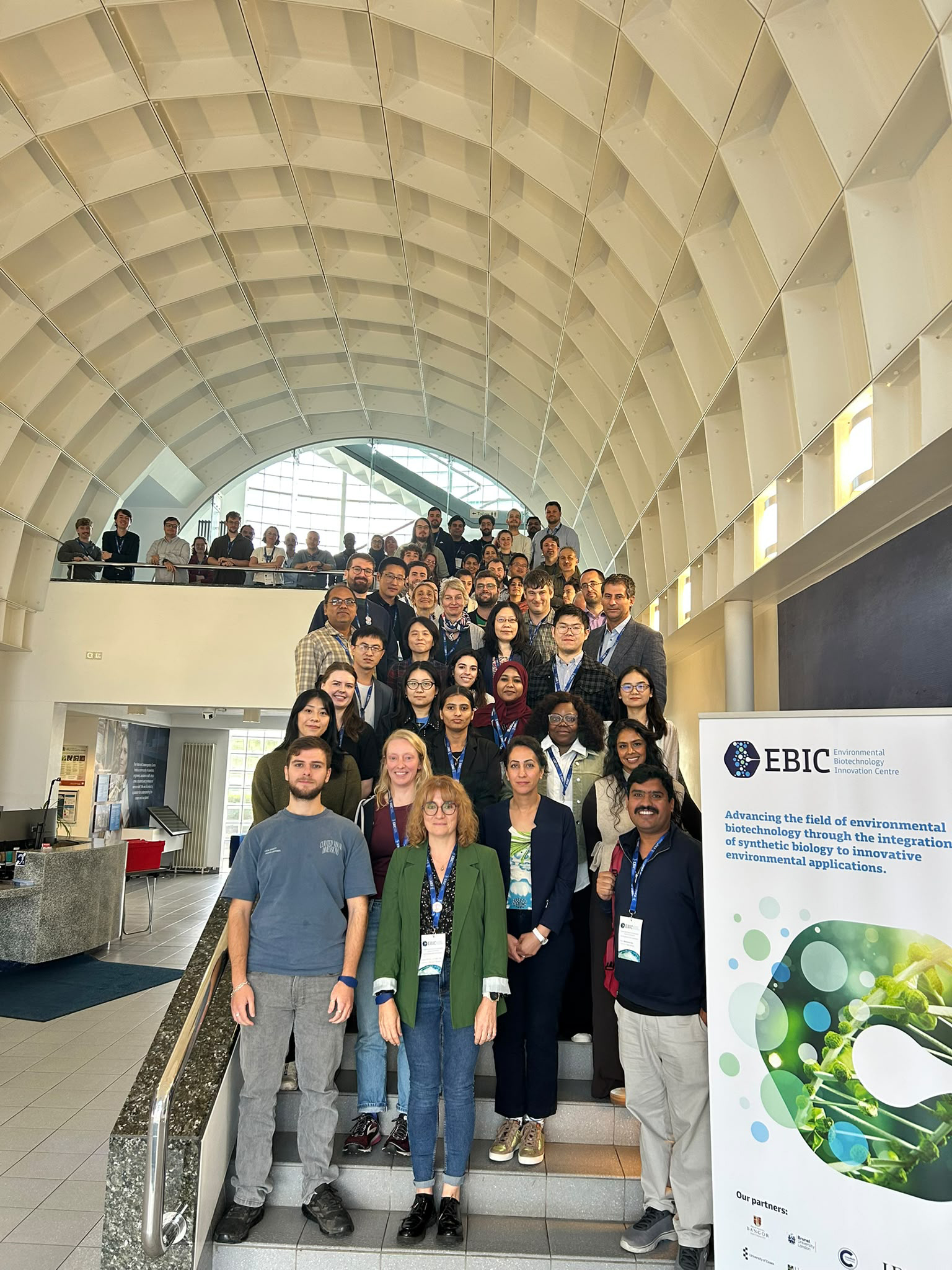
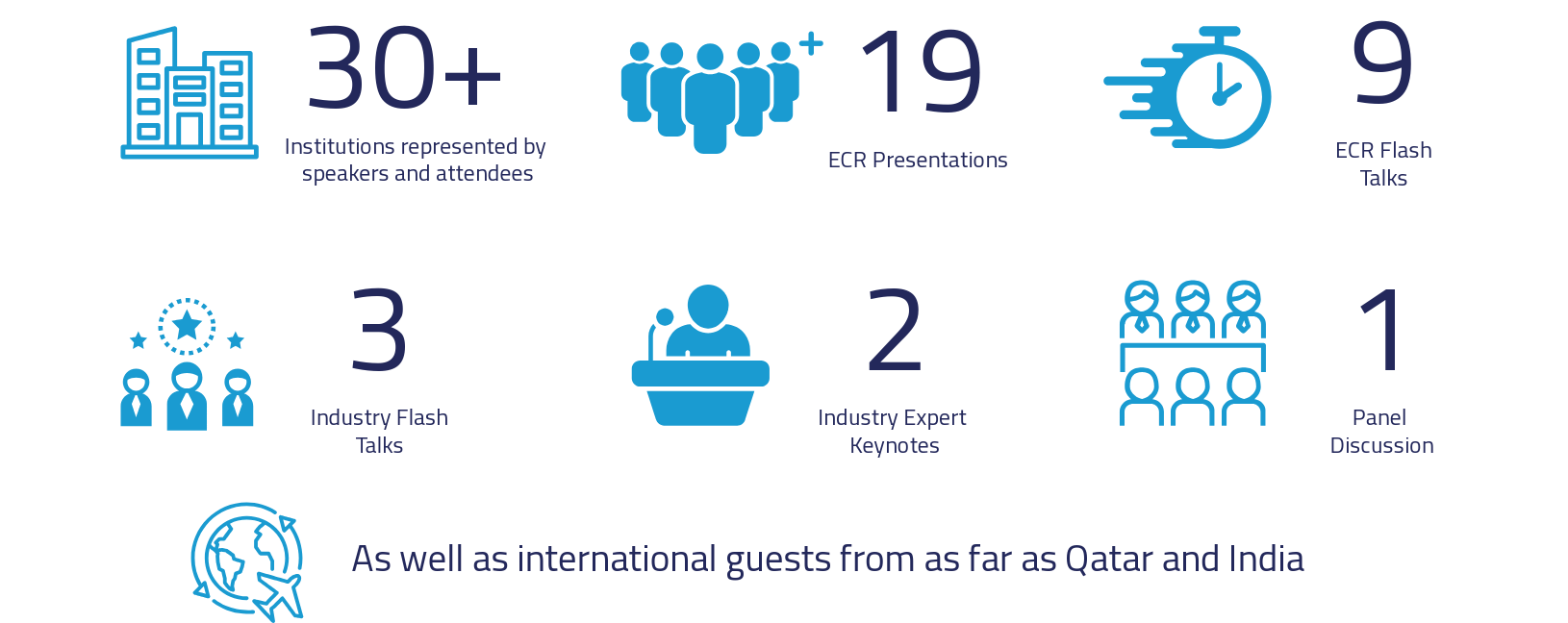
The 2026 Engineering Biology for Environmental Solutions (EBES26) ECR Conference brought together 87 delegates from 30+ institutions and 4 countries for two days of research, collaboration and networking at the National Oceanography Centre, Southampton. Organised and led by Early Career Researchers from across the EBIC Hub, EBES 20206 showcased the breadth of emerging research in environmental engineering biology, from bioremediation, water treatment and biofilms to synthetic biology, resource recovery and sustainable biotechnology. But EBES26 was about more than a programme of research presentations. It was about creating connections across disciplines, institutions and career stages, and giving emerging researchers the opportunity to share their work with academic colleagues, industry, policy and regulatory experts and technology providers.
Led by ECRs, supported by the wider community
A defining feature of EBES26 was that it was conceived, organised and delivered by EBIC’s ECR community. The organising committee brought together Lyuboslava Harkova (University of Southampton), Rachel Samson (Cranfield University), Prabhakar Srivastava (Bangor University), Minyeong Yoo (University of Southampton), Hannah Adams (University of Essex), Deping Li (University of Southampton) and Tatiana Spatola Rossi (Heriot-Watt University), supported by Kristell Le Corre Pidou, EBIC Hub Manager, and Nicola Heaven, EBIC Knowledge Mobilisation & Science Communication Officer.
This builds on the strong ECR community that has developed across the EBIC Hub since its launch. In particular, colleagues from the ELEMENTAL Hub were among the early supporters of EBES and have continued to work closely with EBIC, contributing to the development of the ECR community and helping create opportunities for researchers to connect, share ideas and collaborate across the wider environmental engineering biology landscape. Their continued engagement, alongside contributions from ECRs and colleagues across the EBIC partner universities reflects the collaborative spirit behind the event. EBES26 was very much a community effort, supported by colleagues who have been working together from the early stages of these initiatives and continue to support the development of the next generation of environmental engineering biologists.
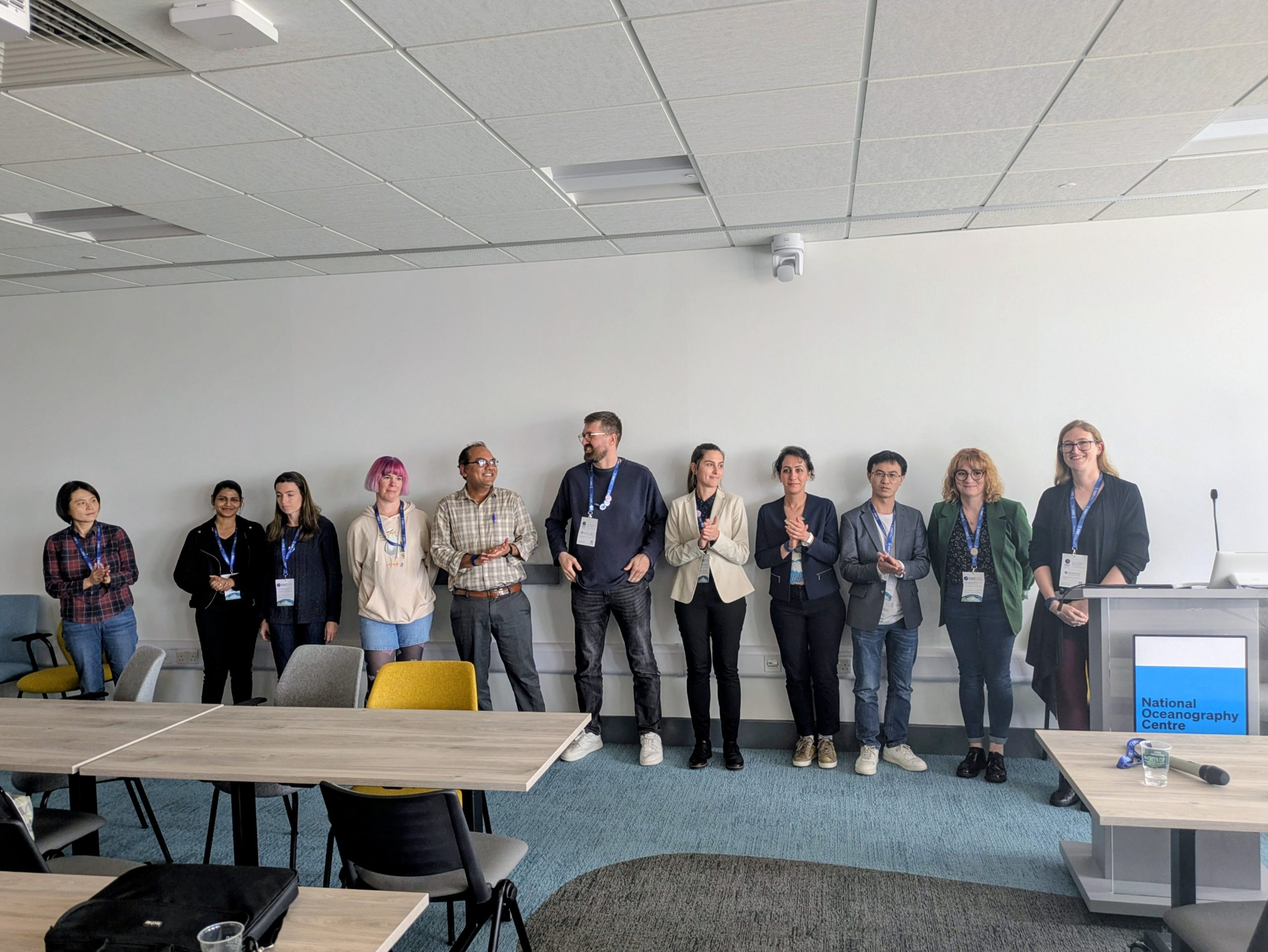
ECR Organising Committee, pictured together with last years’ committee also.
EBES26 – In Numbers
Two days of research, ideas and collaboration
The scientific programme covered five broad themes:
- Environmental Bioremediation & Water Treatment, exploring approaches to pollution detection, biological treatment and resource recovery.
- Synthetic Biology & Engineering Biology Platforms, focusing on the tools and biological systems needed to engineer microorganisms for environmental applications.
- Biofilms, Microbial Communities & Environmental Systems, examining microbial interactions and their potential for environmental applications.
- Metals, Mining & Resource Recovery Biotechnology, highlighting biological approaches to resource recovery and metal management.
- Sustainable Biotechnology & Environmental Adaptation, exploring how biological systems can be developed and adapted for challenging environmental conditions.
Alongside the main presentations, researchers shared emerging work through flash talks and posters, covering topics including gold nanoparticle recovery, marine oil-degrading bacteria, environmental bioinformatics, engineering biology metrology and biocontainment. The combination of longer presentations, short talks and posters created a particularly dynamic programme, giving researchers at different stages and with different areas of expertise multiple ways to contribute and connect.
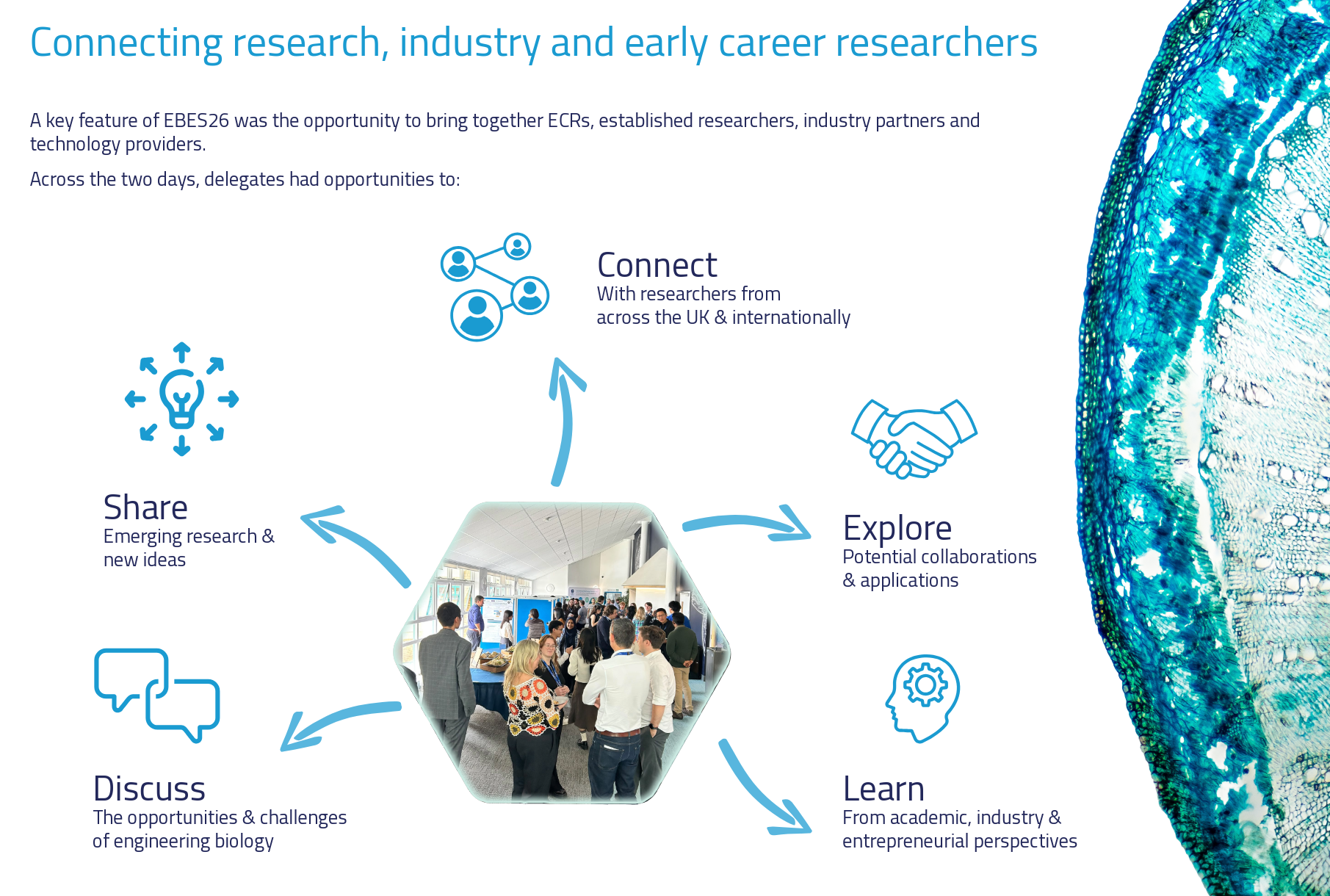
Connecting research with the wider innovation landscape
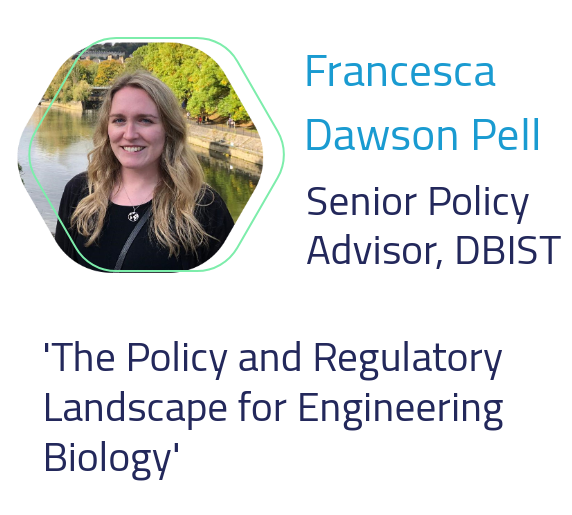
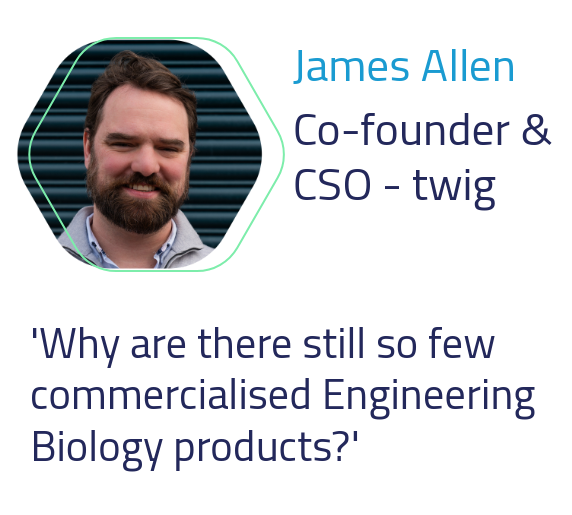
EBES26 also deliberately looked beyond academic research. Contributions from Oxford Nanopore Technologies and GENEWIZ provided insight into technologies relevant to environmental engineering biology, while our keynote speakers brought perspectives from policy and entrepreneurship. Francesca Dawson-Pell, Senior Policy Advisor at the Department for Business, Innovation and Science, explored the UK policy and regulatory landscape for engineering biology, including the balance between enabling innovation and maintaining public trust and safety. On the second day, James Allen, Co-founder and CSO of twig, shared his entrepreneurial journey and discussed the challenges involved in taking new engineering biology technologies towards commercially viable products. These perspectives complemented the research programme and helped researchers think beyond the laboratory, considering how ideas can ultimately be developed, translated and deployed responsibly.
Innovation and responsibility
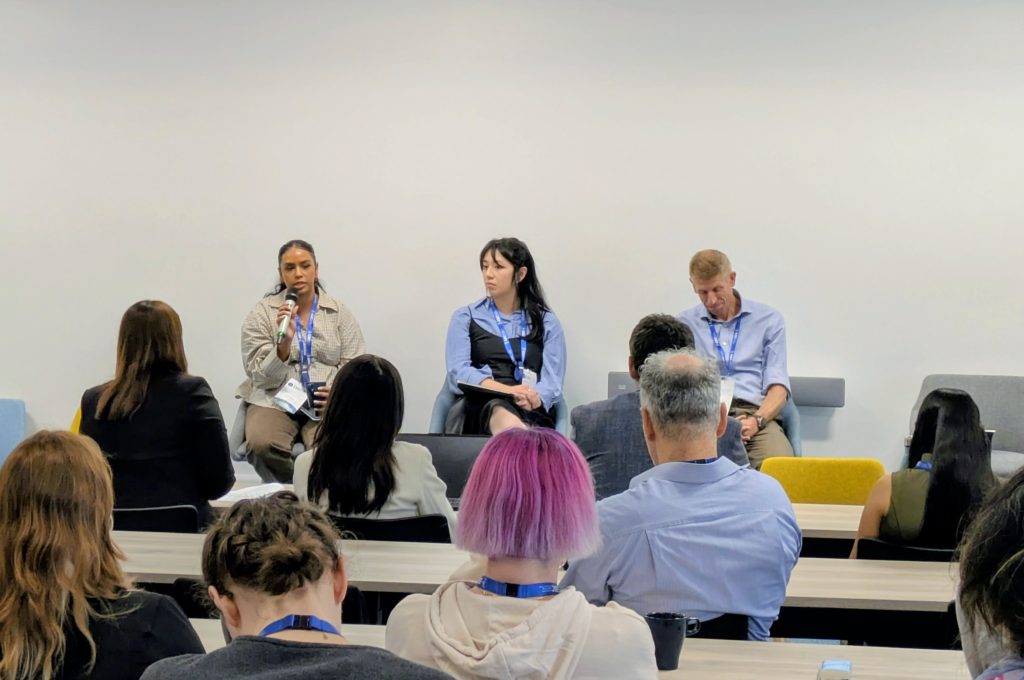
One of the highlights of the conference was the panel discussion on “Biocontainment Techniques and the Safe Use of Engineering Biology for Environmental Application”, chaired by Victor de Lorenzo (CNB-CSIC, Madrid and Chairman of EBIC independent advisory board). The panel brought together Pete Vale from Severn Trent Water, Yasmin Meeda and Karen Fung from Cranfield University, representing different perspectives from industry, research and the ECR community. Discussion covered some of the key challenges associated with moving engineering biology towards real-world environmental applications, including containment, evidence generation, public perception and responsible deployment. The session reinforced an important message running throughout EBES26: scientific innovation needs to develop alongside appropriate evidence, governance and responsible approaches to deployment.
 Celebrating ECR research
The conference also provided an opportunity to celebrate the quality and creativity of the research being undertaken across the community. With support from GENEWIZ, awards were presented for the best presentation and best poster.
- Best Presentation: James Croxford, University of Glasgow – “Dynamics of SynBio and SynComs in environmental biofilms”
- Best Poster: Harry Maguire, University of East Anglia – “Development of transformation systems for engineering a range of diverse environmental bacteria”
Congratulations to James and Harry, and to everyone who contributed presentations, posters and flash talks throughout the conference.
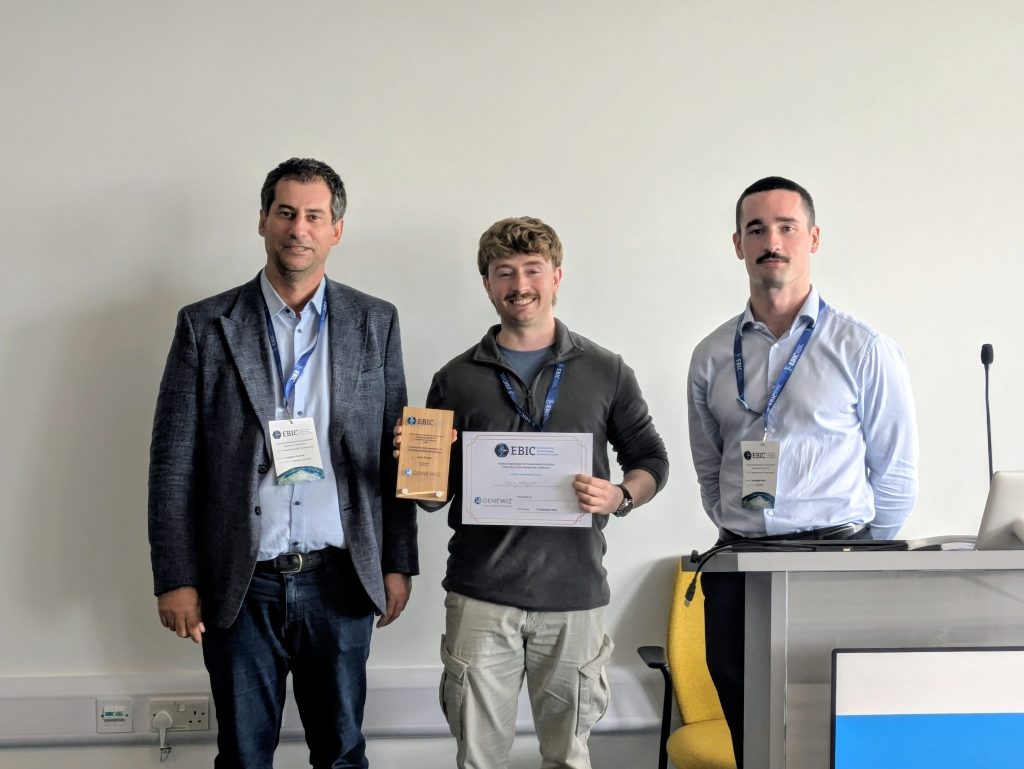
Best Poster Prize – Harry Maguire, University of East Anglia – ‘Development of transformation systems for engineering a range of diverse environmental bacteria’.
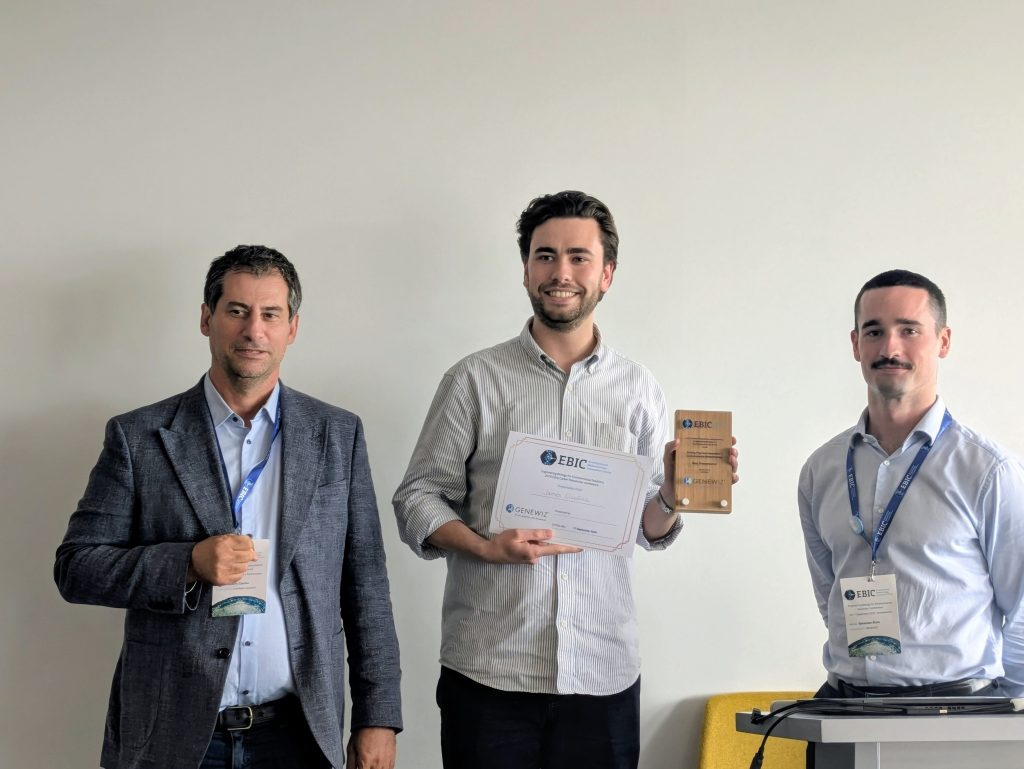
Best Presentation – James Croxford, University of Glasgow – ‘Dynamics of SynBio and SynComs in environmental biofilms’.
Congratulations to both winners, and to everyone who presented their research throughout the conference.
Looking Forward
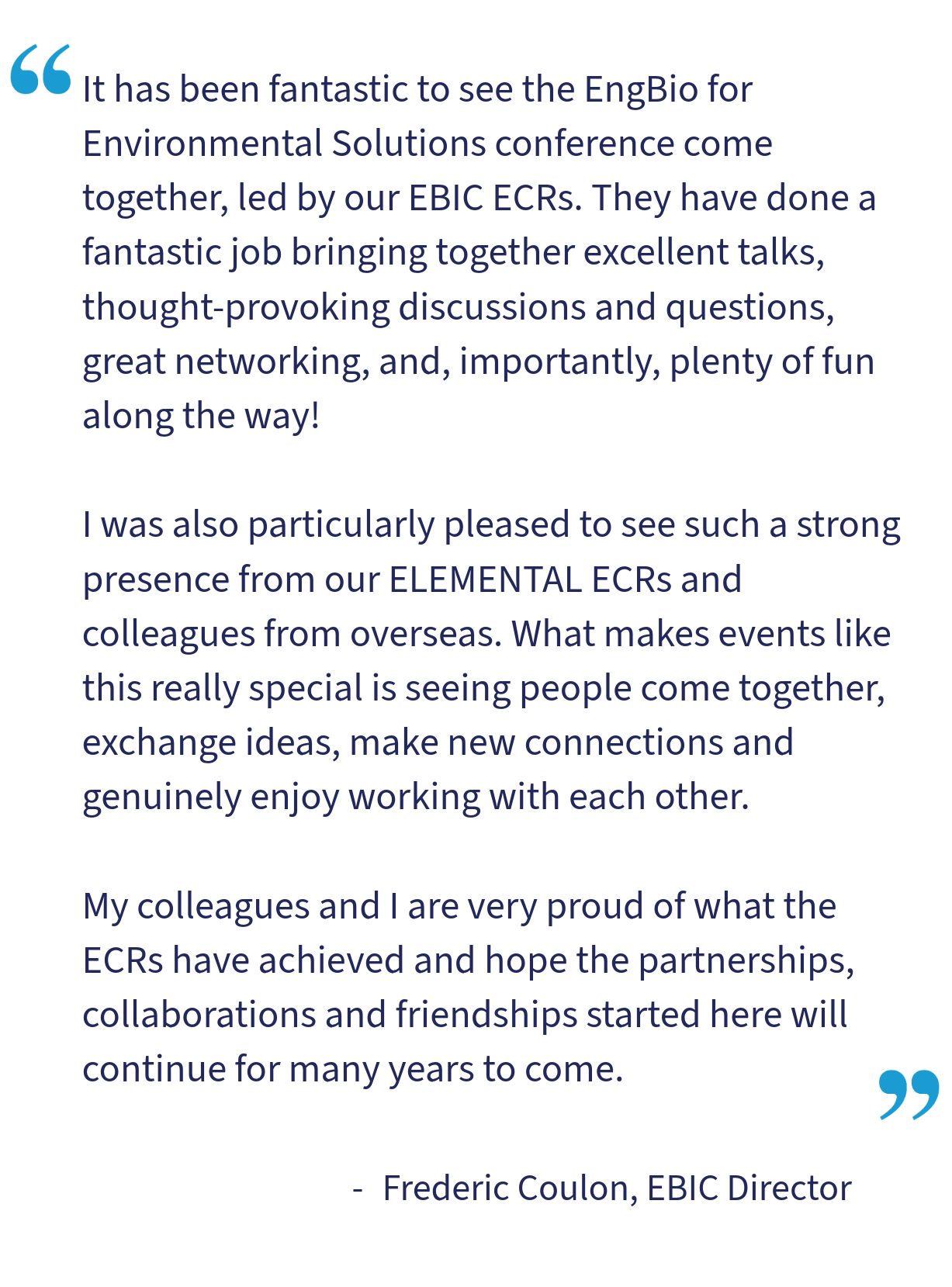
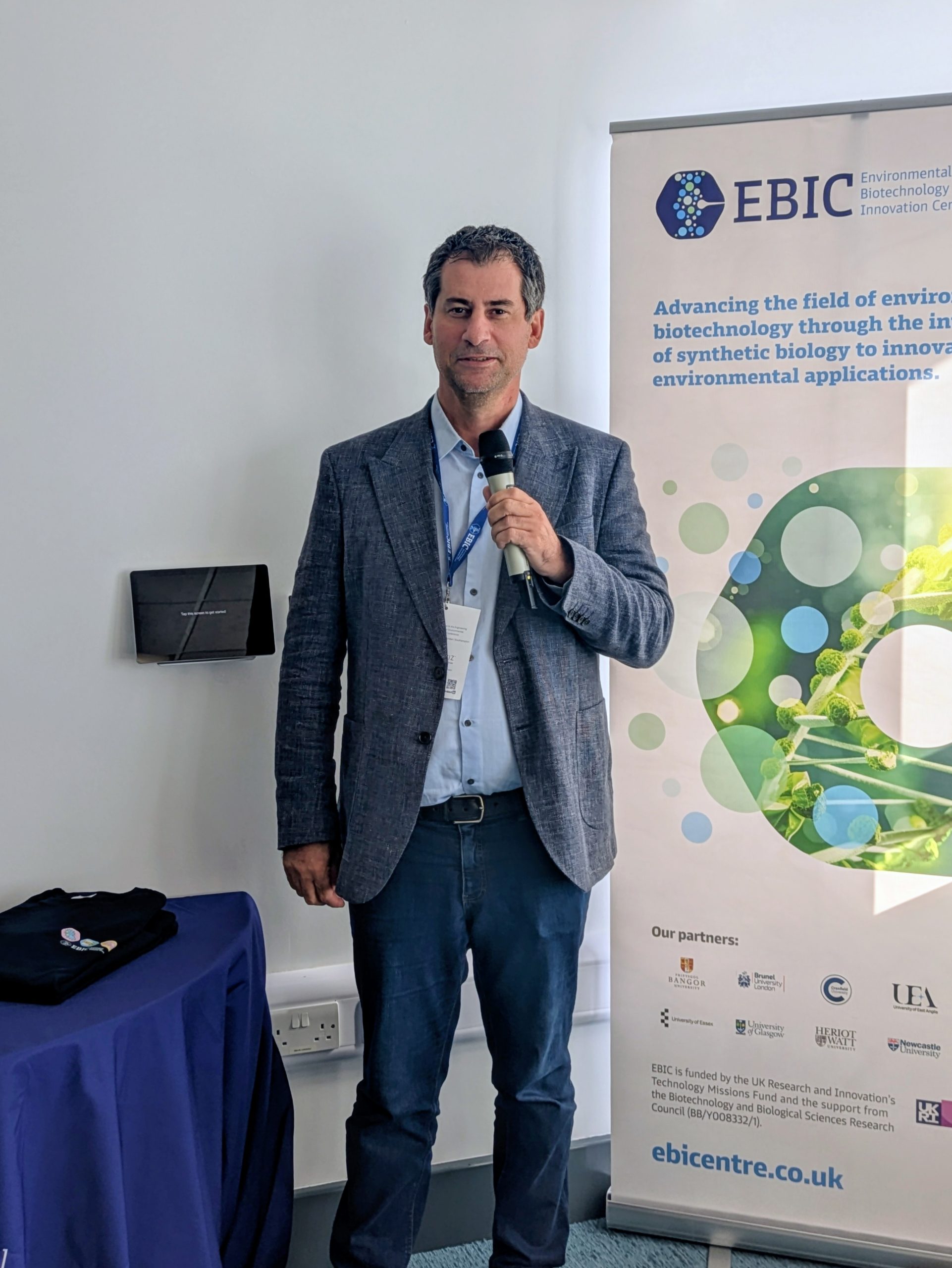
EBES26 demonstrated the value of creating spaces where ECRs can take ownership, build networks and engage directly with researchers and organisations beyond their immediate projects.
With 87 delegates, 4 countries, 30+ organisations and 38 representatives from the EBIC Hub, the conference provided a genuinely broad platform for exchanging ideas across environmental biotechnology and engineering biology.
Perhaps most importantly, it strengthened the community behind the science. The involvement of ECRs from across EBIC, together with the continued support of colleagues from the ELEMENTAL Hub and other partner communities, showed the value of working collaboratively from the outset and continuing to support ECRs beyond individual projects or institutions.
A huge thank you to all our speakers, presenters, delegates, partners and, particularly, the ECR organising committee for making EBES26 such a vibrant and engaging event. We are also grateful to GENEWIZ for sponsoring the presentation awards and to all colleagues across the Hub who contributed their time, expertise and support.
The conversations and connections made in Southampton are only the beginning. We look forward to seeing the collaborations, ideas and innovations that emerge from the EBES26 community.

