
Roundtable discussion in Brussels: Carving a path to regulatory approval for environmental biosolutions
As a molecular microbiologist, scientific innovation has always been at the forefront of my career, and I have seen how engineering biology has grown substantially in recent years. Since I started working on the NAVIREG project in April, I have learned about the regulatory landscape for GMOs in the UK, particularly for genetically modified microorganisms (GMMs) with environmental applications. It struck me that our current regulatory framework does not reflect the scientific knowledge and innovation we have today, and innovators are struggling to navigate regulatory pathways that do not accommodate the capabilities of their technologies.
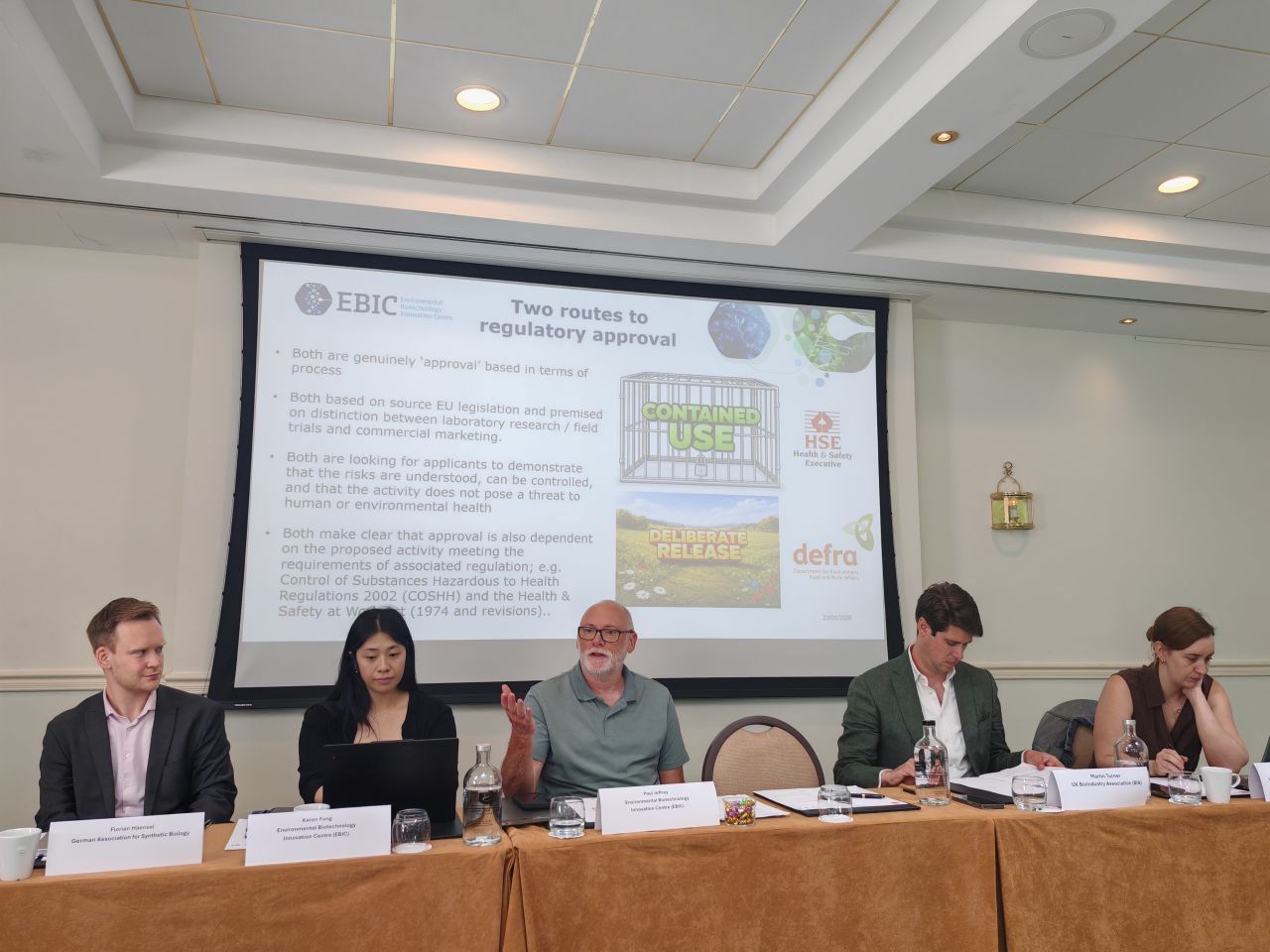
Paul Jeffrey at the roundtable presenting on the regulatory challenges facing genetically modified biosolutions in the UK
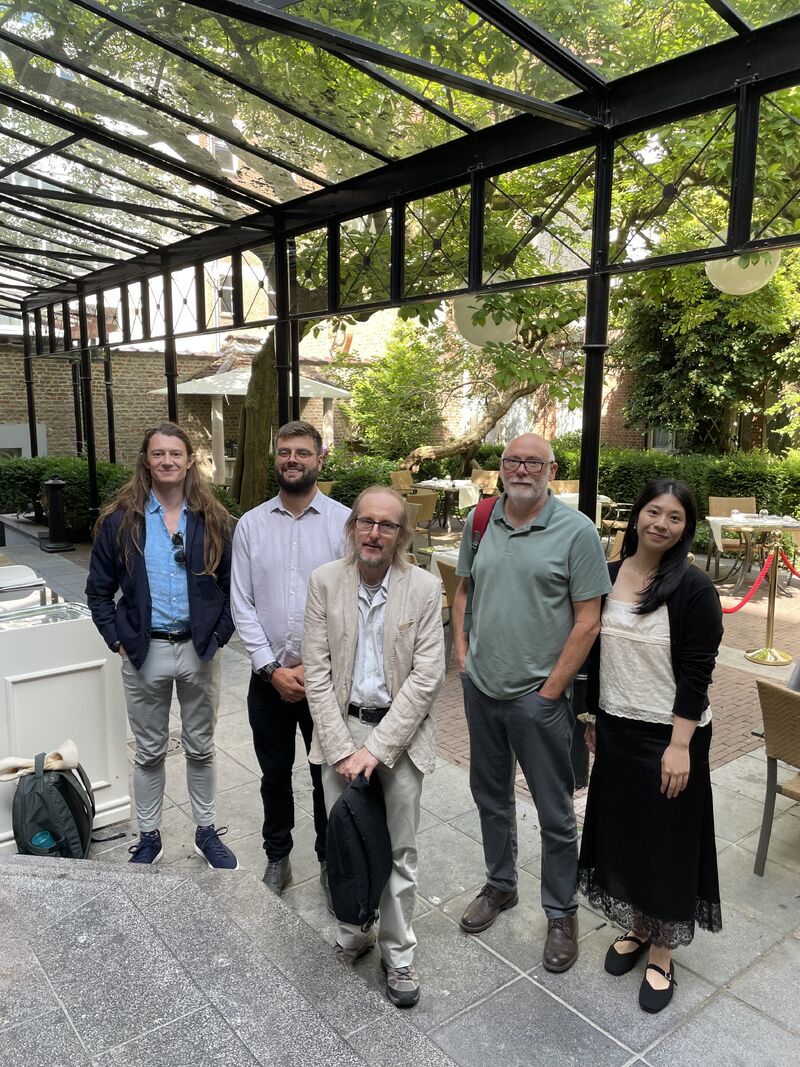
EBIC members Francis Hassard, Paul Jeffrey, and Karen Fung alongside other UK representatives who attended the roundtable discussion
Author

Dr Karen Fung, Research Fellow in Engineering Biology, NAVIREG & Cranfield University.
Learn More
EBIC, together with the UK BioIndustry Association (BIA) and EuropaBio, co-hosted a roundtable discussion on unlocking the path to market for environmental biosolutions, with a particular focus on GMMs designed for environmental release, in Brussels on 29 June. This provided an excellent opportunity to bring together innovators, regulators, academics, and engineering biology representatives from across the UK and the EU to begin a conversation on navigating regulatory approval for environmental biosolutions.
Paul Jeffrey, Francis Hassard, and I attended the roundtable in Brussels, where we took part in a series of insightful discussions. We first heard presentations from Paul Jeffrey on the regulatory challenges facing genetically modified biosolutions in the UK, followed by a presentation from a representative of EuropaBio outlining the EU perspective. It was clear that regulatory uncertainties exist in both the UK and the EU, and that GMO legislation has not kept pace with the latest scientific innovations. We then discussed risk thresholds and environmental impact assessments, exploring how these could be made more proportionate and fit for purpose for GMMs in environmental applications. The objective of these discussions was to identify where uncertainty exists within current regulatory frameworks and to determine what evidence innovators and regulators need to move forward with confidence.
 Next, we heard a presentation from Francis Hassard on biocontainment and its role as a safety mechanism for environmental GMM applications. Francis highlighted the need to test GMMs in environments they are likely to encounter; however, the costs associated with generating the biocontainment evidence required often present a significant barrier for SMEs. One quote from Francis that resonated with everyone was, “Zero risk is not testable.” This raises an important question: how can we generate evidence to demonstrate something poses zero or only negligible risk? Following this, participating SMEs discussed their technologies, their current approaches to containment, and how they might approach containment under a more innovation-friendly regulatory framework.
Following the roundtable, I came away with a greater appreciation that regulations are essential because they protect both people and the environment. However, we also need to consider how our regulatory framework can evolve to keep pace with scientific innovation while providing innovators with the support they need to navigate regulatory requirements. The conversation about the future regulatory landscape for GMMs in environmental applications has begun, and I look forward to continuing it as I engage further with regulators and innovators on this important topic.

