
EBIC researchers have access to an exceptional suite of specialist facilities that underpin high-quality, impactful research. From advanced laboratories and pilot-scale systems to state-of-the-art analytical and monitoring technologies, these facilities enable rigorous experimentation, accelerate innovation, and support collaboration across disciplines. Access to this infrastructure is essential for translating cutting-edge environmental biotechnology research into real-world solutions.
The Edinburgh Genome Foundry, The University of Edinburgh
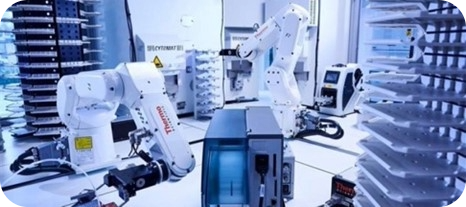 The Edinburgh Genome Foundry (EGF) is a research facility specialised in the modular assembly of DNA constructs using a highly automated robotic platform, with projects as diverse as programming stem cells for use in personalised medicine, living biosensors and the scale up of bio-based recycling technologies.
Automation solutions allow for reliable, high-throughput, and cost-effective execution of repetitive tasks. Researchers can be trained on selected equipment (e.g. acoustic dispenser, Opentrons OT-2 robot, high-throughput microfermenter) to accelerate their research. The EGF team helps design and plan high-throughput projects, using expertise in lab automation, DNA design and cloning strategies. They deliver projects involving long and complex constructs (>5kbp), comprising large numbers of genetic parts, or combinatorial libraries. The platform is agnostic on the host chassis, capable of assembling constructs for use in bacteria, yeast and mammalian cells.
National Research Facility For Water And Wastewater Treatment, Cranfield University
 The National Research Facility for Water and Wastewater Treatment, supports research on the inter-dependencies between treatment and distribution processes, condition monitoring and performance of technologies.
The facility offers industry and academia the capability to design, test and operate water and wastewater treatment and distribution systems. It enables research into future technologies such as low energy treatment and nutrient and energy recovery, condition monitoring and performance assessment including development of repair techniques that are less disruptive to supply and system-wide operation and control and integrated data systems. Working with our researchers, collaborators can investigate the inter-dependencies between treatment and distribution processes, condition monitoring and performance of technologies.
Advanced Sensor Lab , Cranfield University
 The Advanced Sensors Lab at Cranfield conducts cutting-edge research and device development on new sensor technologies to address challenges across the water, environment, and healthcare sectors. It has particular strengths in the development of cheap paper-based devices as well as electrochemical and optical sensors. Our sensors lab provides a range of sensing platforms for rapid identification and quantification of chemical, biological and microbial targets in water, soil and other environmental matrices, in food safety contexts and for forensic science applications.
The laboratory’s core facilities comprise three platforms:
- An electrochemical platform for sensor development, including a multichannel model potentiostat for powerful lab-based assay and a small portable format for field testing.
- An optical sensing platform, including a Raman spectrometer, a microfluidic chip, and fluorescent microscopy coupled with an ultra-fast camera.
- Engineered paper-based device platform with molecular amplification such as real-time polymerise chain reaction (qPCR) and loop-mediated isothermal amplification, and a wax-printer for manufacturing paper devices.
Supported research programs have been funded by both government and industry grants, including contributions to the UK national initiatives on wastewater surveillance for COVID-19 and wastewater-based epidemiology.
The Gutierrez Lab, Heriot-Watt University
 The Gutierrez Lab occupies approximately 178m2 of laboratory space near to a recently refurbished microscopy unit and state-of-the-art NMR facility that is aligned with the University of Edinburgh. All the facilities required for research in conventional and molecular microbiology are located in or adjacent to Dr. Gutierrez’s lab. Available equipment includes PCR cyclers, quantitative PCR cycler, DGGE apparatus, pulse-field gel electrophoresis, conventional electrophoresis, UV-vis spectrophotometer, fluorometer, HPLC system, centrifuges (high-speed and ultracentrifuge), biological safety cabinets and fume hoods, constant-temperature rooms, -80°C freezers, autoclaves, and a wide range of other analytical instruments. Fluorescent in-situ hybridisation (FISH) and DNA-based stable isotope probing (SIP) are well established techniques of the lab.
The Centre for Environmental Biotechnology, Bangor University
 The Centre for Environmental Biotechnology (CEB) was founded in 2017 with co-funding through ERDF-WEFO and BU aiming at building the capacity and facilitate the research on environmental microbiology, metagenomics, and industrial applications of microorganisms and their enzymes.
CEB is directed by PG and includes DJ, AY, Dr. Olga Golyshina, and Prof. Rob Griffiths as other members. Together, these researchers established a suite of interlinked laboratories sharing equipment, expertise, and knowledge creating a cutting-edge research and training environment focused on environmental microbiology and bioremediation.
National Wastewater Research Laboratory, Bangor University
 The National Wastewater Research Laboratory (NWRL) is a state-of-the-art national research facility for understanding the fate, flow and detection of microbial pathogens in wastewater and environmental waters. Funded through capital investment from DEFRA, UKHSA, DHSC and Welsh Government, the laboratory runs the national wastewater-based public health surveillance programme on behalf of the Welsh Government as well as undertaking research on behalf of UKHSA.
Biological Engineering: Wastewater Innovation at Scale (BEWISe) Facility, Newcastle University
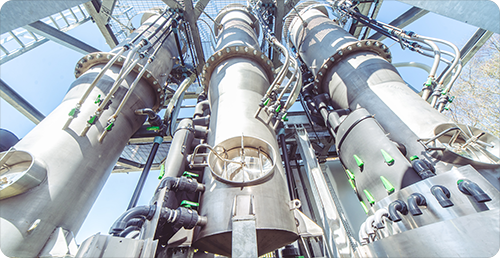 The BEWISe facility is the first of its type in Europe in large-scale wastewater treatment research using bacteria. The facility is based at Northumbrian Water’s sewage treatment plant at Birtley, near Gateshead. It will play a key role in improving how sewage is treated by speeding up the transition from existing energy-intensive treatment processes to low carbon alternatives with lower running costs. It allows researchers from around the globe to carry out experimental investigation of water engineering innovations across a range of scales which will set a new global standard for wastewater research. A world-leading research space, developing cutting-edge solutions for sustainable wastewater treatment. The facility includes pilot plants of conventional processes alongside two that can generate energy from wastewater and a low energy passive treatment system all in replicate. Therefore, scientifically rigorous experiments can be conducted at an industrially credible scale, saving time and costs.
The School of Biological Sciences, University of Southampton
The School of Biological Sciences is equipped with a wide range of state-of-the-art equipment and resources, together with independently managed research facilities. The shared laboratories contain individual research groups and common equipment areas housing tissue culture laboratories, a suite of bioreactors, biofilm microfluidics platforms, biofilm reactors, an engineered protein production laboratory, genomics equipment including real-time PCR, and specialised research space for CL2 microbiology. We also have access to a range of facilities and expertise across the university and our partners including:
- Centre for Hybrid Biodevices
- Centre for Proteomic Research
- EPSRC National Crystallography Service (NCS)
- Imaging and Microscopy Centre (IMC)
- National Oceanography Centre (NOCS)
- The Southampton Diffraction Centre (including Macromolecular Crystallisation)
- Zepler Institute Cleanroom Facilities
- A full list of our facilities is available here
School of Life Sciences, University of Essex
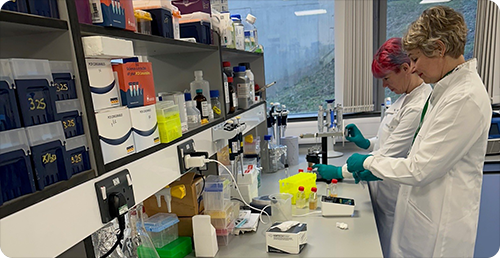 The School of Life Sciences at the University of Essex has excellent facilities for cell and molecular biology, biochemistry and microbiology research, with dedicated molecular biology and cell/tissue culture rooms, facilitating the use of recombinant DNA, microbial/viral culture, the study of protein function, siRNA library screens, various cellular assays and the generation and use of recombinant viruses. We have microbial (including anaerobe / CO2-enriched) culturing facilities with dozens of controlled-temperature/light growth facilities. We have a range of centrifuges/ ultracentrifuges, as well as optical/ fluorescence/ luminescence/ ELISA plate readers.
Molecular biology facilities include: single cell transcriptomics (10X GENOMICS), ddPCR, robotic high-throughput liquid handling systems, NGS platforms (Illumina MiSeq sequencing machine), along with all the standard equipment for extracting, quantifying and separating nucleic acids, including a range of PCR/QPCR machines, multiple flurospectrophotometers, spectrophotometers, bioanalysers and automated size-selectors (e.g. Blue Pippin). Bioimaging equipment includes FACS BD Accuri C6 flow cytometers, an Incucyte® S3 System, three-dimensional high-speed (ms) and long-term (d) live fluorescence microscopy, widefield/deconvolution, confocal laser scanning, and total internal reflection fluorescence microscopes, Nikon Spinning Disk Confocal Microscopes and a unique (to the UK) dual-inverted light-sheet instrument: 3i's Marianas LightSheet.
For biophysics, biochemistry, protein structure research, we are equipped for large-scale protein production and purification. We have a state-of-the-art crystallisation facility including a Gryphon crystallisation robot with lipid cubic phase arm attachment, Leica M125 microscopes, variable-temperature vibration-free crystal incubators, full facilities for ‘manual’ crystallisation, and apparatus for manipulating, cryo-cooling and transporting protein crystals to synchrotron facilities. A single crystal microspectrophotometer is also in place. New anaerobic facilities for preparing Cryo-EM grids using a Vitrobot IV (ThermoFisher) are also available.
We have a range of spectrophotometers, including a SX20 stopped-flow spectrophotometer and a LKS80 laser flash spectrometer, a biomedical Electron Paramagnetic Resonance (EPR) Facility housing a new Bruker E500, UV/visible/near infra-red and fluorescence spectroscopy (Olis instrument), a microcal isothermal titration calorimetry instrument, surface plasmon resonance (SPR) facilities and a Dianthus machine.
Facilities for environmental analytical chemistry include multiple GCs with diverse detectors (MS/MS, QqQ, FID, FPD, ECD), ICP-MS, uPLC/MS, and HPLC for measuring trace gases, metals, hydrocarbons and lipids. An autoanalysis suite, and Dionex ion exchange chromatography, for quantifying soil/sediment nutrients. Bespoke systems for measuring sediment oxygen/nutrient flux, with multi-plex supported Picarro and LI-COR gas exchange equipment to quantify soil/sediment CH4/CO2/H2O fluxes. A sediment particle size analyser and high-end elemental analyser for simultaneous CNS isotope ratio analyses. We have equipment for monitoring bioaerosols, including a Rapid-E+ real-time bioaerosol monitor, as well as a range of analytical equipment (including new triple-quadrupole GC-MS/MS, and laser ablation ICP-MS)
Earlham Biofoundry, Earlham Institute
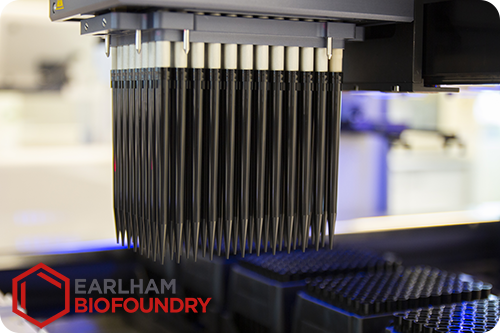 The Earlham Biofoundry is a state-of-the-art synthetic biology and laboratory automation facility at the Earlham Institute, funded as a National Bioscience Research Infrastructure by the BBSRC (UKRI) and serving the UK bioscience and biotechnology communities. It combines expert scientific support with cutting-edge automation platforms to design, build, test and scale complex molecular and microbiological workflows, accelerating research through standardised, high-throughput experimentation and data-driven engineering biology. The Biofoundry offers access to optimised automated services such as DNA assembly, high-throughput fermentation, and screening, and collaborates with academic and industrial partners to develop bespoke workflows, drive innovation, and provide training in laboratory automation and synthetic biology.
EBIC's collaboration with Earlham means EBIC have access to the two of the main UK biofoundries, increasing our impact and strengthening our capabilities.
To learn more about Earlham see:
Trusted partners


