
Development of Peptide/Aptamer-Based Biosensing Platforms for Real-Time, Ultrasensitive Detection of PFAS
 Principal investigator: Dr Dhiman Chakravarty (Cranfield University)
Co-leads:
Prof. Frederic Coulon (Cranfield University), Prof Zhugen Yang (Cranfield University), Heni Wang (Cranfield University)
Project partners:
Dr. Christopher McElroy (National Measurement Laboratory)
Project Summary
PFAS are a group of man-made chemicals often called “forever chemicals” because they do not break down easily in the environment. One common example is PFOA, which has been linked to serious health and environmental problems. Detecting these chemicals usually requires expensive laboratory equipment and trained specialists, making routine or on-site testing difficult.
Project Goal: Affordable, on-site PFAS Detection
This project aims to create a new, affordable, and easy-to-use testing method that can detect PFAS directly in the field, such as at water sources or contaminated sites.
Key Features
The approach uses biological tools inspired by nature. PFAS-recognising biomolecules will be screened, identified and integrated into a working sensing platform. When PFAS is present in a sample, biomolecular interaction will trigger a signal that is amplified many times, allowing even extremely small amounts to be detected.
A Phased Approach
The work will be carried out in three main steps:
- Screening – screening of peptides/proteins that can specifically recognize PFOA and trigger signal amplification.
- Building – Building a simple test device suitable for on-site use.
- Testing – comparing the new test’s accuracy with standard laboratory methods.
Expected Outcomes
By the end of the project, we expect to deliver a working prototype that can detect PFAS at very low levels. This technology could support environmental monitoring, protect public health, and open the door to real-world testing and future commercial development.
By making PFAS detection more accessible and affordable, this project will help ensure faster response to contamination issues and support broader efforts to mitigate the environmental and health impacts of these harmful chemicals.
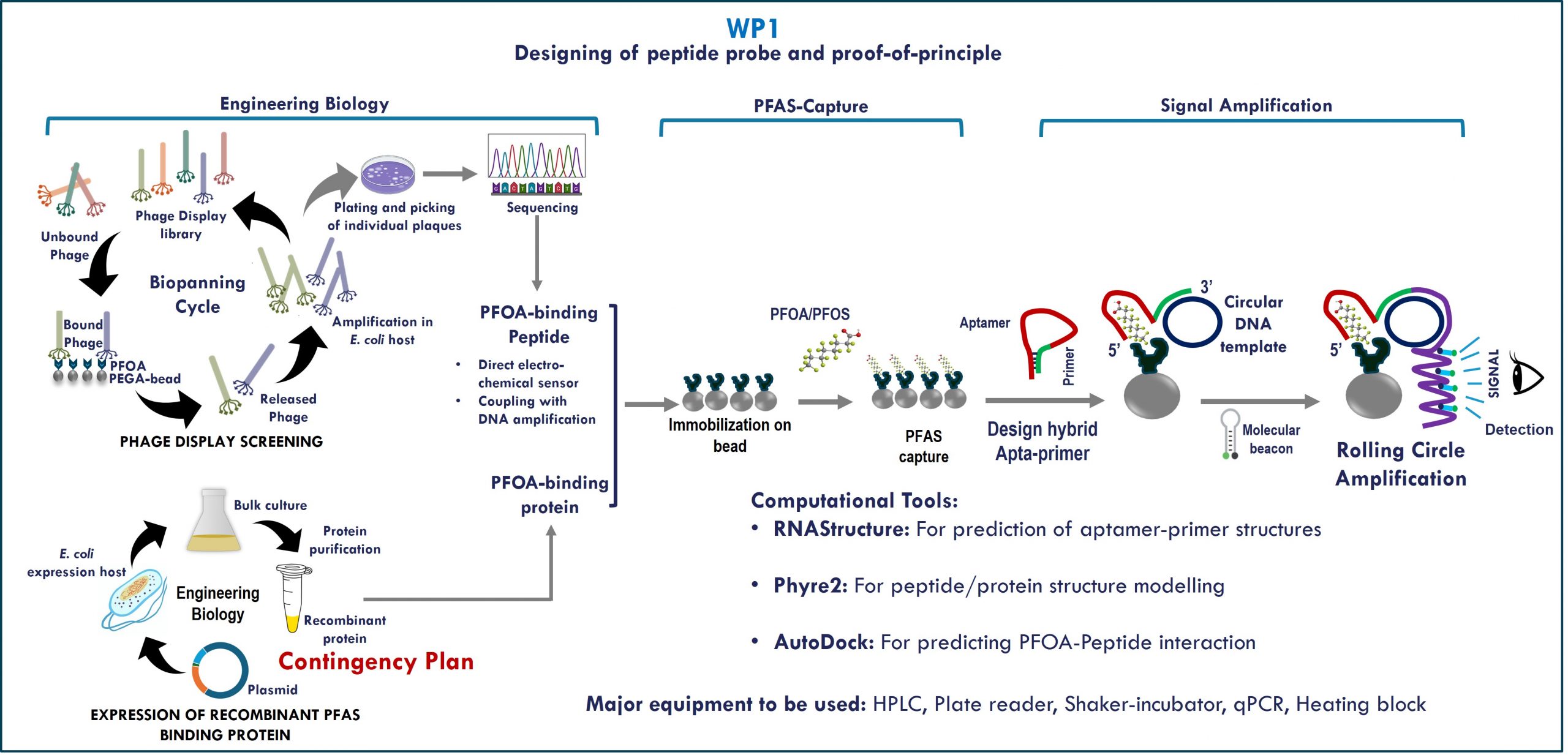
Figure 1: Work Package 1 (WP1)
It involves the screening and selection of small peptides that specifically interact with PFOA, followed by coupling of this molecular recognition with signal amplification. Signal enhancement will be achieved using a PFOA-binding aptamer capable of initiating rolling circle amplification upon specific target interaction.
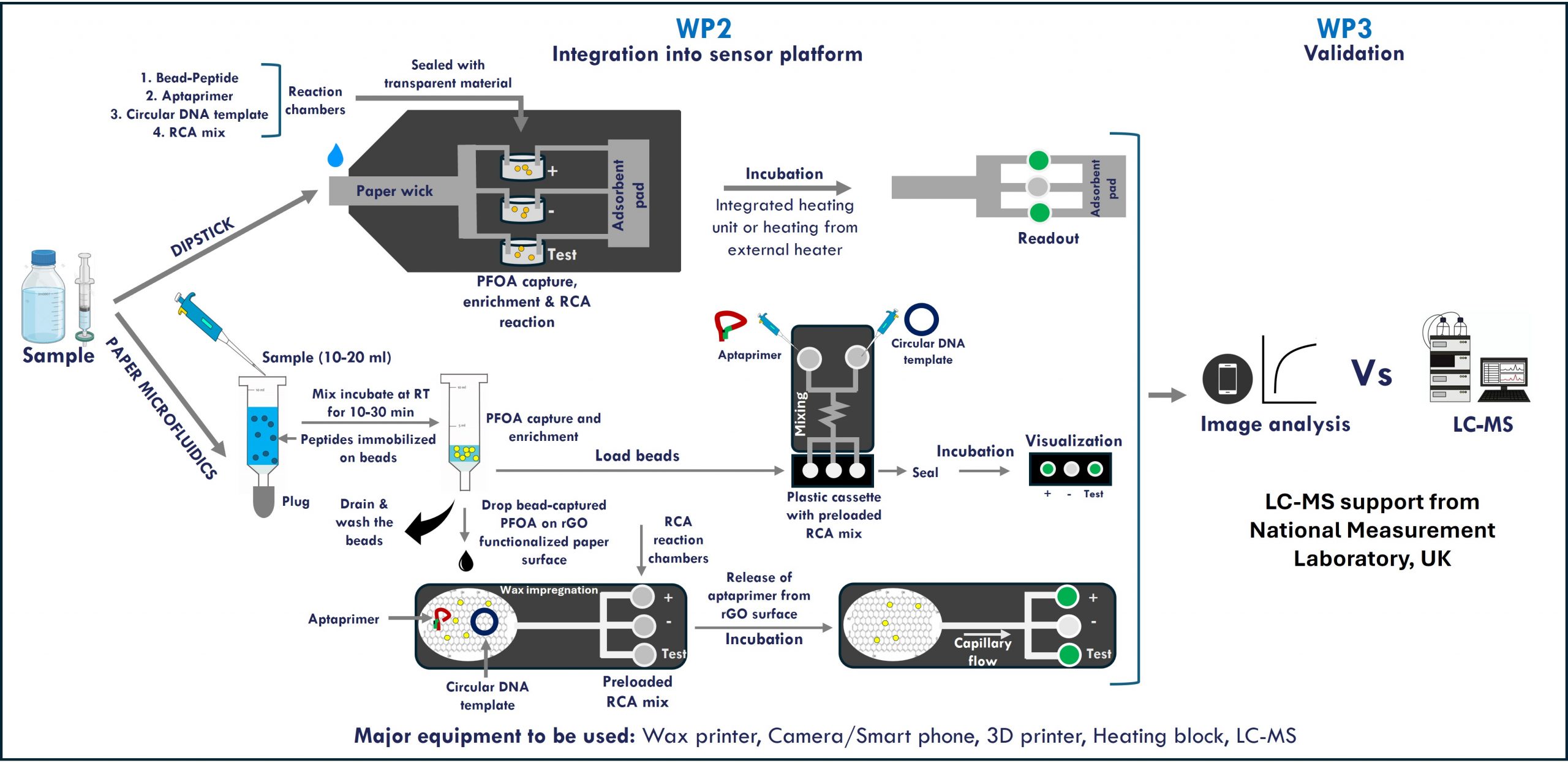
Figure 2: Work Package 2 (WP2) and Work Package 3 (WP3)
WP2 focuses on the integration of the developed recognition and amplification components into a suitable sensor platform. Dipstick-based and/or paper microfluidic formats will be explored to develop a prototype sensing platform. WP3 involves validation of the prototype sensor through benchmarking against liquid chromatography-mass spectrometry (LC-MS), the gold standard method for PFAS quantification.

