
The Problem
The chemical industry is involved in nearly every aspect of the modern-day life. The industry relies heavily on processing fossil-fuel derived feedstocks to produce synthetic chemical products, and as such, these processes lead to the release of billions of tonnes of carbon dioxide (CO2). Chemicals produced from oil and gas make up 90% of all raw materials, with the largest consumers of petrochemicals being fertilisers, plastics and textiles which make up 70% of the total demand. Given that fossil fuels are a finite resource, and with rapid population growth, increasing industrialisation, and rising geo-political uncertainty, there is considerable pressure on finite resources including fossil fuels. Additionally, the increasing scale of industrial activities, scientists have seen an increase in detection of chemical signatures in various extreme environments from the highest mountains to the deepest oceans, as well as in the human food chain. Many synthetic chemicals are non-biodegradable and persist in the environment for a long time. There is an urgent need to find sustainable alternatives that reduce environmental pollution and are suitable alternatives to industrial chemicals.
The EngBio Solution
Biomanufacturing using microorganisms to transform low-cost carbon feedstocks into cleaner alternatives to synthetic chemicals has become a promising approach to replace traditional, inefficient and unsustainable manufacturing of various fossil-fuel based products (Figure 1). Fossil-based feedstocks are no longer considered the sole foundation of the chemical industry as the shift to alternative feedstocks become increasingly appealing as a renewable and environmentally friendly alternative. For example, biosurfactants are a biodegradable surface-active alternative to chemical surfactants. Bioplastics are produced from renewable feedstocks and are designed as a bio-based alternative to synthetic plastics. Bio-based dyes offer a cleaner alternative to synthetic-coloured dyes in the textile industry, which often uses large amounts of toxic chemicals. In the past, sustainable feedstocks included plant-derived sugars such as sugarcane. However, with the increasing demand for food production and limited agricultural land, the use of plant-derived sugars restricts scaling up these processes. Instead, alternative feedstocks such as utilising the agricultural residues i.e. the organic by-products from plant matter and gas feedstocks e.g. CO2 and methane, are becoming emerging renewable feedstocks in EB.
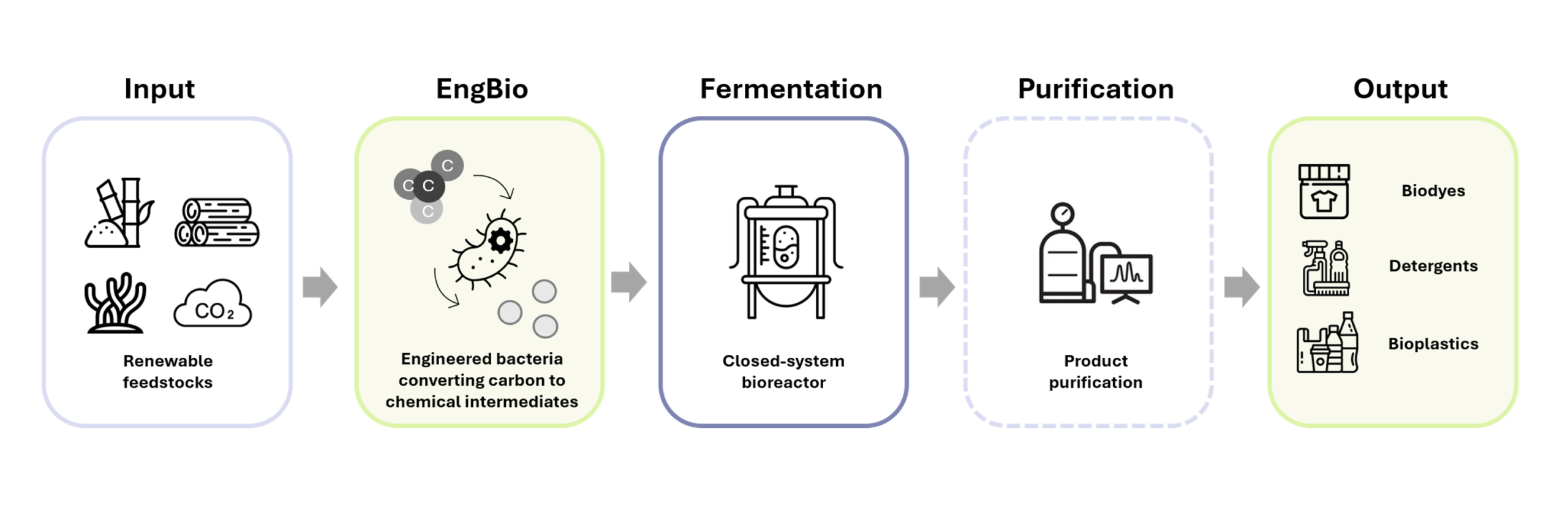
Figure 1. General process of the biomanufacturing of sustainable chemical alternatives
Case Assumptions
Most examples follow a similar framework, where genes involved in the expression of the specific protein to produce the compound of interest is identified from a specific organism and engineered into a microorganism to produce the compound of interest at larger scale using renewable feedstocks as a carbon source. Naturally, the bacterial species that produce these biobased compounds are environmental bacteria such as Cupriavidus necator which produce PHAs or Streptomyces coelicolor which produce natural pigments. Microbial chassis such as Escherichia coli, Bacillus species, and Pseudomonas species are often genetically engineered for this technology. For CO2 capture, cyanobacteria are commonly used due to their natural ability to capture carbon. In the case of cyanobacteria where it already has the natural ability to capture CO2, gene editing techniques such as CRISPR-Cas systems are commonly used to edit the genes involved in carbon-fixing pathways to convert CO2 into biobased compounds. For this case study, the technology involves using engineered cyanobacteria Synechococcus elongatus UTEX 2973 to convert CO2 feedstock into biobased compounds under contained-use conditions to produce products such as hyaluronic acid for personal care.
Regulatory Pathway and Evidence Requirements
This case study involves the use of a closed-system bioreactor under conditions that limit contact of the GMO with humans and the environment. Therefore, the case study falls under The Genetically Modified Organisms (Contained Use) Regulations 2014. A work through of the risk assessment considerations associated to the engineering of a Cyanobacteria to convert CO2 into sustainable chemical alternatives is outlined along with evidence requirements to support the risk assessment approval pathway (Figure 2).
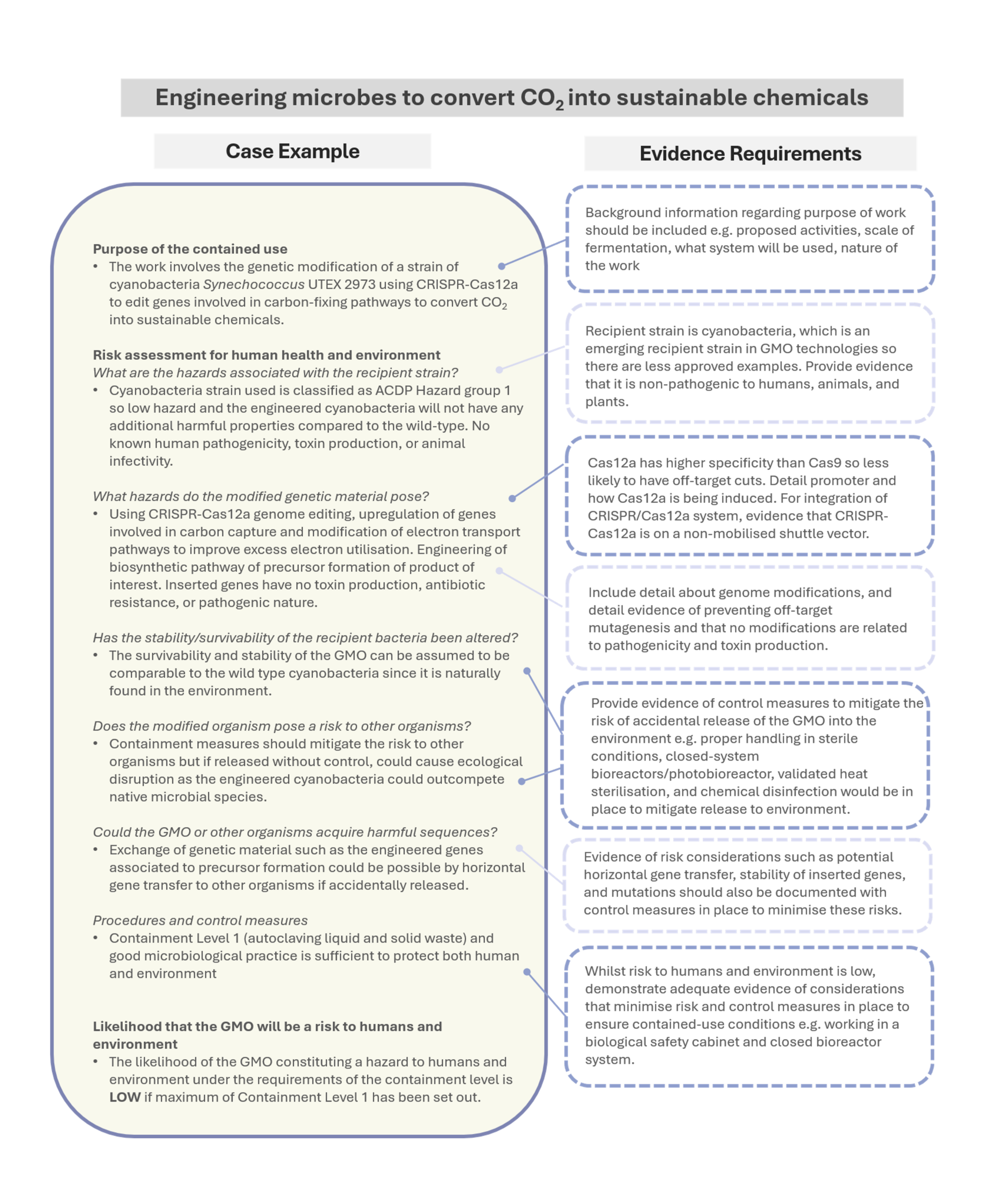
Figure 2. Example walkthrough of risk assessment and evidence requirements associated to engineered Synechococcus for converting CO2 into sustainable chemicals
Other Regulatory Requirements
- If using CO2 as a feedstock, the technology falls under Carbon Capture, Usage, and Storage (CCUS)
- Obtain environmental permit for this technology
- See Post-combustion carbon dioxide capture: emerging techniques – GOV.UK for more information
UK REACH (HSE Chemicals Regulation Division)
- If producing ≥ 1 tonne per year legal entity, submit a dossier (IUCLID) to UK REACH and provide evidence of physico-chemical properties, human health data, environmental data, and exposure scenarios
Similar Cases
For Comparison
Deep Blue Biotech (UK) have engineered cyanobacteria to capture CO2 to produce high-value molecules using water, light, and CO2 and have demonstrated this with hyaluronic acid. The engineered cyanobacteria are cultured in a water-based photo bioreactor which is exposed to light and CO2 and the cells break down CO2 into valuable chemicals by photosynthesis.
neo-fossil (UK) have developed a carbon-negative technology that takes up CO2 to convert into chemical compounds. The technology involves identifying genes from ancient plants that absorb CO2 and engineer the pathway into bacteria with these genes along with the genes involved in converting CO2 into precursors of the compound of interest. The compounds are then extracted and sold as carbon-negative products to be used in products such as concrete aggregates and insulation.
Colorifix (UK) have developed a technology to produce biobased coloured dyes for the textile industry. Different organisms are identified for their ability to produce a particular pigment and the genes involved in the production of that pigment are identified. The genes of interest are then heterologously expressed in a recombinant chassis. Colorifix provide the GMO as a freeze-dried sample and sell this to the customer, e.g. a textiles company, where they will be grown in bioreactors. The subsequent culture is then pumped directly into standard dye machines along with the yarn, fabric, or garment to be dyed.
For Contrast
Amyris (USA) is a biotechnology company regarded as a pioneer in the industrialisation of synthetic biology that applied engineering biology techniques to produce sustainable chemicals for cosmetics, fragrance, and pharmaceuticals using plant-derived sugars. The company filed for bankruptcy in August 2023 due to high-profile financial failure and failure to efficiently scale-up.
Visit the EBIC Website: https://ebicentre.co.uk/
Disclaimer: This document is for information purposes only and provides general guidance about the process of applying for and securing approval for the use of Genetically Modified Organisms. The guidance is not intended to constitute advice in relation to any specific case. Every attempt has been made to present up to date and accurate information. We provide no warranty as to the accuracy of the information contained in this guidance and accept no liability for any loss, damage or inconvenience caused as a result of reliance on such information. We are not responsible for the content of external websites which are linked from this guidance. For administrative advice, form submissions, and general regulatory inquiries regarding GMO contained use, you can contact the HSE Notifications Officer directly via email at bioagents@hse.gov.uk or your local competent authority at https://www.gov.uk/guidance/developing-genetically-modified-organisms for feedback and more information.
Version: 1.1 Published: 10th November 2026
Note: This guidance reflects the UK regulatory framework and associated guidance in place at the time of preparation. As regulatory requirements and guidance may evolve alongside scientific and technological developments, readers should consult the relevant regulatory authorities to confirm the latest applicable requirements.