
The Problem
Globally, over 10 million contaminated soil sites have been identified, of which 50% are affected by metal and metalloid pollution. Rapid industrialisation, urbanisation, and poor waste disposal are contributing to soil pollution. Soil pollution poses a significant threat to human health, agriculture, and the environment due to the presence of toxic pollutants. Heavy metals including lead (Pb), cadmium (Cd), arsenic (As), mercury (Hg), nickel (Ni), cobalt (Co), manganese (Mn), and aluminium (Al) are commonly present in soils, of which As, Pb, Cd and Hg are included in the top 20 Hazardous Substances of the Agency for Toxic Substances and Disease Registry, posing serious threats to the environment and human health. Contaminated soil decreases soil fertility, which puts pressure on food production as vast areas of land are unusable. When crops are grown on contaminated soil, research has shown that these contaminants enter the food chain and pass contaminants to higher trophic levels from plants to humans, posing a long-term risk to human health.
Conventional soil purification methods include mining, chemical stabilisation, soil washing, and thermal processes. Whilst the methods are effective, they are extremely expensive, labour-intensive, time-consuming, and are highly disruptive to the local ecosystem. Another alternative is microbial remediation however, it is limited by large-scale application and exhibits instability. Therefore, a suitable alternative is needed to effectively address contaminated soil whilst being cheap and accessible.
The EngBio Solution
Phytoremediation is an innovative solution that is gaining prominence as a solution to soil contamination (Figure 1). Phytoremediation uses the natural capacity of different plants to remove or reduce soil pollution in various ways. Phytoextraction involves absorbing the contaminants from the soil and storing them in the plants tissue, which in turn stabilises the contaminants inside the soil, which is referred to as phytostabilisation. Some plants can absorb contaminants in the water through roots by rhizofiltration or transform some contaminants into the form of flying by phytovolatilisation. The advantage of phytoremediation over conventional methods is that it is solar-driven and requires less use of chemicals, which is much cheaper and is more ecologically friendly. However, traditional phytoremediation techniques are not effective particularly in the presence of co-contaminants, low pollutant bioavailability, and limited plant adaptation to stressed environments. Engineering biology has been used to enhance phytoremediation, including genetically modifying the plant to enhance tolerance to pollutants and engineering the microbial consortia for enhanced pollutant degradation.
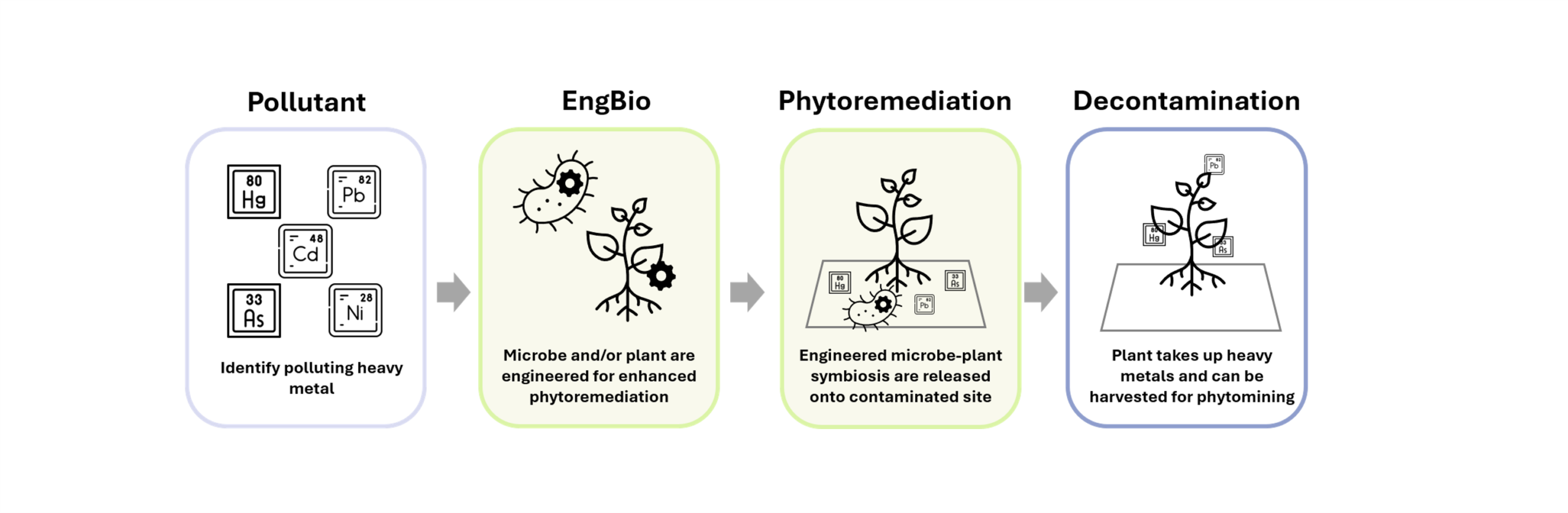
Figure 1. General process of phytoremediation of heavy metal pollutants using engineered plant and microbe symbiosis
Case Assumptions
Engineering biology has been used to improve phytoremediation. This can be achieved by genetic engineering of plants which involves the introduction of metabolic pathway genes or genes from microbial detoxification pathways to enhance phytoremediation potential of plants. Alternatively, engineering the microbes that are symbiotic with the plants can assist the plants phytoremediation potential by maintaining soil fertility, regulate nutrient cycling and enhancing the availability of soil nutrients. Genetic modification of endophytes in particular can substantially improve remediation efficiency of phytoremediation of heavy metal pollution. For this case study, endophytic bacteria from the genus Enterobacteriaceae are engineered with enhanced ability to improve phytoremediation of Cd and Pb in Brassica juncea by the introduction of glutathione (GSH) synthase gene gcsgs.
Regulatory Pathway and Evidence Requirements
This case study involves the genetic modification of endophytic bacteria which would be produced under Contained Use conditions. However, the implementation of the engineered endophyte as a phytoremediation tool involves the release of the engineered microbe in the environment. For this case study, the regulatory pathway is mapped for the release of the engineered microbe in a contaminated field so therefore, this case study falls under The Genetically Modified Organisms (Deliberate Release) Regulations 2019. A work through of risk assessment considerations associated to the phytoremediation of Cd and Pb using engineered endophyte grown with Brassica juncea is outlined along with evidence requirements to support the risk assessment approval pathway (Figure 2).
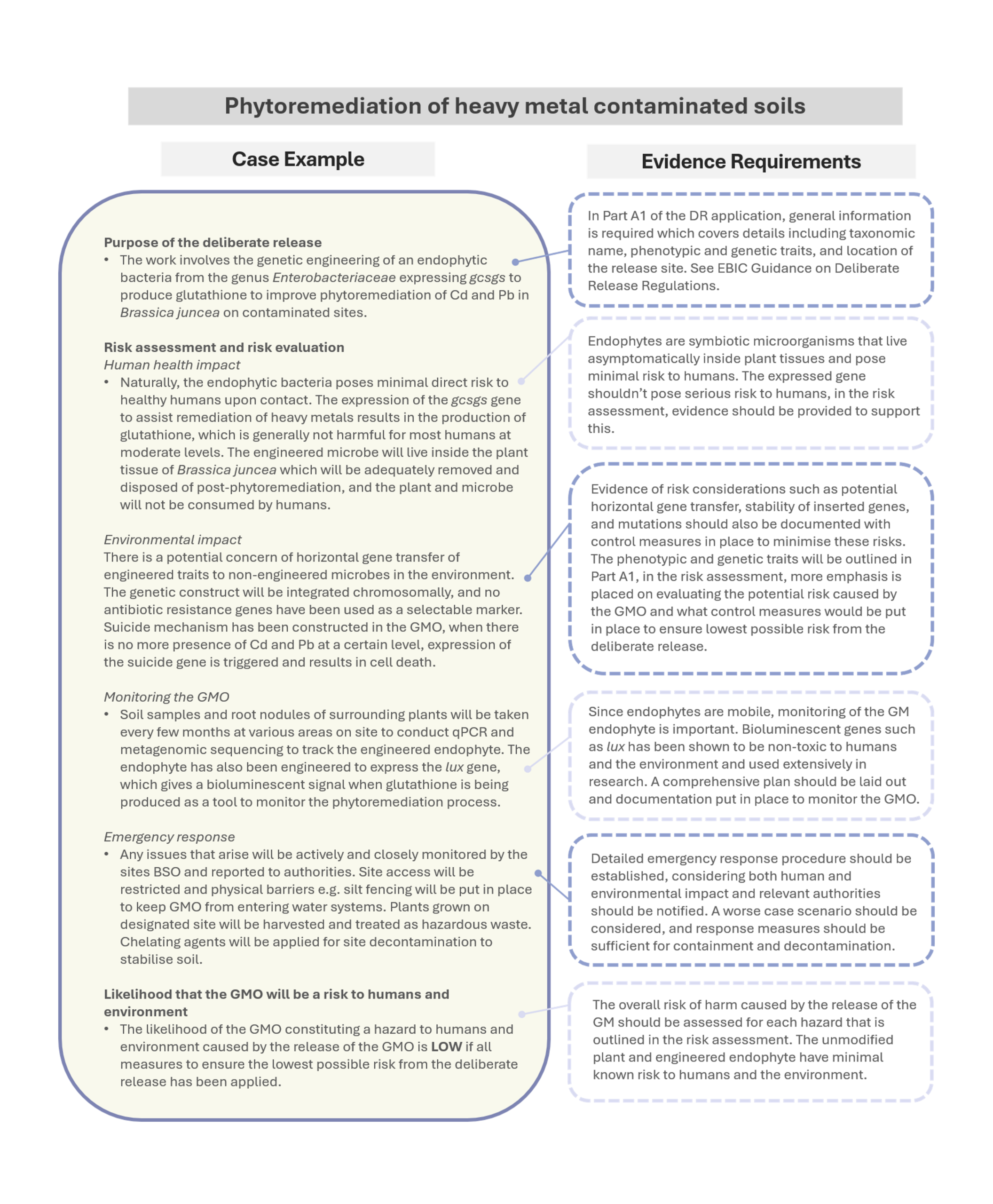
Figure 2. Example walkthrough of risk assessment and evidence requirements associated with engineered endophyte from the genus Enterobacteriaceae for assisting phytoremediation of heavy metals Cd and Pb in Brassica juncea
Other Regulatory Requirements
Environmental Protection Act 1990
- Part VI: Governing of GMOs, with established legal framework for risk assessments, public notifications, and consents required to import, acquire, release or market GMOs, ensuring that human-controlled organisms do not escape or cause damage to the environment
- Part IIA: Contaminated land legislation is required for working on a contaminated site
Environment Agency (Environmental Permit)
- Environment Permit application for remediating contaminated land – Environment Agency (England), Scottish Environment Protection Agency (SEPA), Natural Resources Wales (Wales)
- Ensure consideration of industrial emissions & waste management, processes, feedstock type and quantity, evidence of monitoring and reporting
Similar Cases
For Comparison
Remephy (UK) is a phytoremediation company utilising the symbiotic relationship between plants and bacteria. They have engineered naturally occurring bacteria which allows the selected plants to extract heavy metals more efficiently than the non-engineered bacteria. The plants are then harvested and processed to extract the metals to be recycled back into clean energy supplies. Based on available information, Remephy are positioned at TRL 3-4 as they have validated their prototype in laboratory soil samples.
Deeproot Biolabs (USA) is using plant-based solutions to extract and clean up pollutants and contaminants from soil. They are developing engineering endophytes that live in the plant roots to enhance phytoremediation and phytomining. The company was founded in 2025, so it is in the early stages of development.
For Contrast
Intrinsyx Bio (USA) are a biotech company offering phytoremediation as a service to boost crop yields using naturally occurring endophytes, which increase nutrient uptake, enhance stress tolerance, and improve overall plant health. They have tested their technology in the lab and on fields and have proven the technology to be effective. However, they do not integrate engineering biology and avoid GM hurdles.
Edenspace Systems Corporation (USA) are a crop biotechnology company that used brake fern to extract arsenic from the soil (marketed as Edenfern). Although proven to be successful commercially, interest in the technology became stagnant due to the time-intensive nature of the technology. In addition, the cost of handling hazardous waste generated by the harvested fronds is high. The company decided to transition their focus to specialised agricultural biotechnology.
Visit the EBIC Website: https://ebicentre.co.uk/
Disclaimer: This document is for information purposes only and provides general guidance about the process of applying for and securing approval for the use of Genetically Modified Organisms. The guidance is not intended to constitute advice in relation to any specific case. Every attempt has been made to present up to date and accurate information. We provide no warranty as to the accuracy of the information contained in this guidance and accept no liability for any loss, damage or inconvenience caused as a result of reliance on such information. We are not responsible for the content of external websites which are linked from this guidance. For administrative advice, form submissions, and general regulatory inquiries regarding GMO contained use, you can contact the HSE Notifications Officer directly via email at bioagents@hse.gov.uk or your local competent authority at https://www.gov.uk/guidance/developing-genetically-modified-organisms for feedback and more information.
Version: 1.1 Published: 10th November 2026
Note: This guidance reflects the UK regulatory framework and associated guidance in place at the time of preparation. As regulatory requirements and guidance may evolve alongside scientific and technological developments, readers should consult the relevant regulatory authorities to confirm the latest applicable requirements.