
The Problem
Various chemical products are used in our day-to-day lives, from pharmaceuticals to household cleaning products. The chemical industry relies heavily on processing fossil-fuel derived feedstocks to produce these chemicals, with approximately 95% of feedstocks derived from oil, gas, and coal. The finite nature of fossil fuels coupled with significant greenhouse gas emissions from their processing and the geopolitical uncertainties that increasingly compromise supply chains has triggered a desire to find sustainable biobased alternatives.
Alternative feedstocks for chemical production are required to replace our dependency on fossil fuels. One source being explored is plastic waste, which constitutes both an alternative feedstock and a circular feedstock as it addresses another key environmental issue. Global plastic waste generation is projected to reach approximately 225 million tonnes annually. Plastic pollution is a global problem, with 19-23 million tonnes of plastic waste leaking into aquatic ecosystems, polluting lakes, rivers, and seas which ultimately threatens wildlife and human health. Global awareness of plastic waste and the environmental problems associated with it has increased in recent years. Due to the properties of synthetic polymers, they are highly resistant to degradation, resulting in ineffective end-of-life management. Conventional recycling involves mechanical and chemical recovery, which are not only energy-intensive and selective for material types, but also only recover less than 10% of end-of-life plastics. As a result, effective plastic recycling or upcycling technologies are required to tackle the problem.
The EngBio Solution
An upcoming approach that tackles both problems outlined above is the use of Engineering Biology to valorise plastic waste streams into bio-based chemicals and materials (Figure 1). Biological valorisation using specific catalytic enzymes and engineered microorganisms offers an alternative route to convert these waste streams into value-added outputs, providing closed-loop recycling for plastic waste under a more sustainable and efficient process, with low energy inputs and lower greenhouse gas emissions. Typically, microbial plastic upcycling approaches are target a plastic polymer from one specific waste stream; e.g. nylon from textiles only instead of from various waste streams. However, post-consumer plastic waste streams are inherently variable at large scale, and the use of plastic waste feedstocks will likely be from mixed streams. The bioprocessing of plastic waste into high-value chemicals operates at lower temperatures and therefore lower CO2 emissions, reducing the environmental impact associated with the production of these common chemicals. The overall goal of this platform supports the core principles of green chemistry, to replace synthetic chemicals with bio-based alternatives and addresses several critical environmental challenges – plastic pollution, rising CO2 levels, and reliance on fossil fuels, while generating commercially valuable outputs and creating a circular economy.
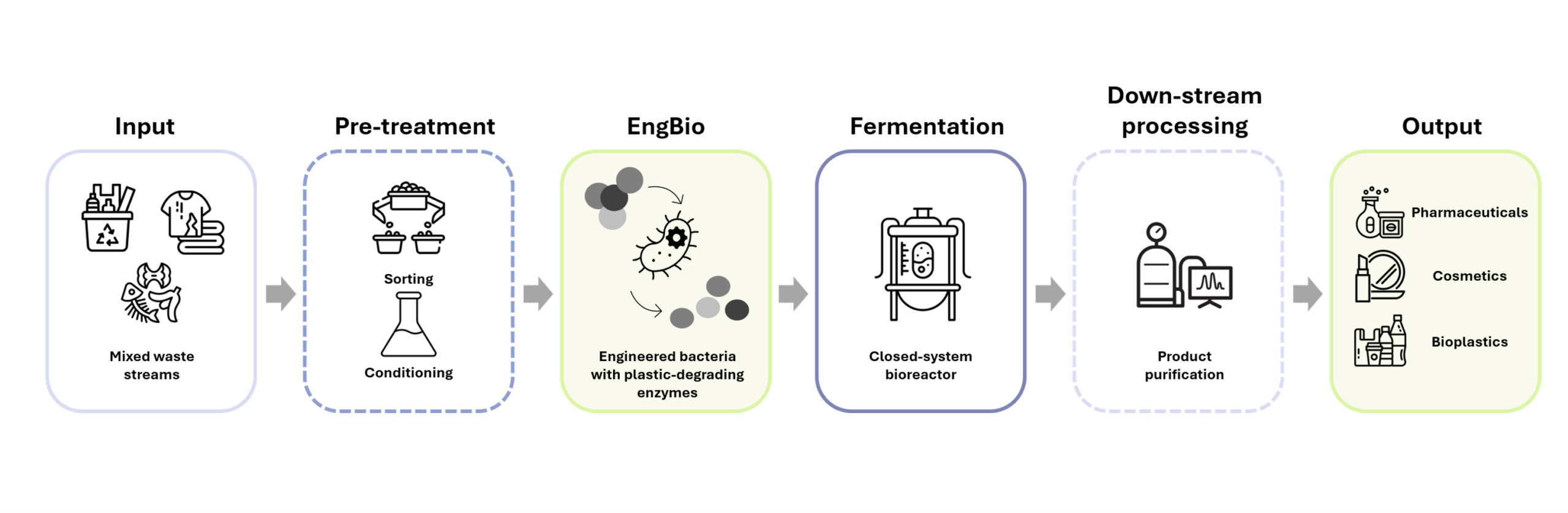
Figure 1. General process of microbial waste valorisation into value-added products
Case Assumptions
Several naturally occurring microorganisms have been discovered with the ability to degrade plastic into an energy source due to specific enzymes that alter long hydrocarbon chains typical of many types of plastics. The process involves the excretion of extracellular enzymes which attach to the surface of the plastic and hydrolyse it into short polymer intermediates which are assimilated by the microbes as a carbon source . Most reported enzymes degrade hydrolysable plastics such as polyesters, polyamides, and polyurethanes. These enzymes include PETase, MHETase, cutinase, and nylonase. Initial research focused on describing the biodegradation of plastics and monomer recovery, but recent advancements have explored the valorisation of plastics using enzymatic biocatalysis into the production of value-added products. For this case study, it is assumed that a company is using an engineered PETase expressed in Pseudomonas putida (P. putida) KT2440 to valorise PET waste into the metabolic intermediate terephthalic acid (TA) that is further processed into adipic acid, a precursor for nylon production.
Regulatory Pathway and Evidence Requirements
This case study involves the use of a closed-system bioreactor under conditions designed to prevent contact of the GMO with humans and the environment. Therefore, the case study falls under The Genetically Modified Organisms (Contained Use) Regulations 2014. A work through of risk assessment considerations associated to the engineering of P. putida to valorise PET waste is outlined along with evidence requirements to support the risk assessment approval pathway (Figure 2).
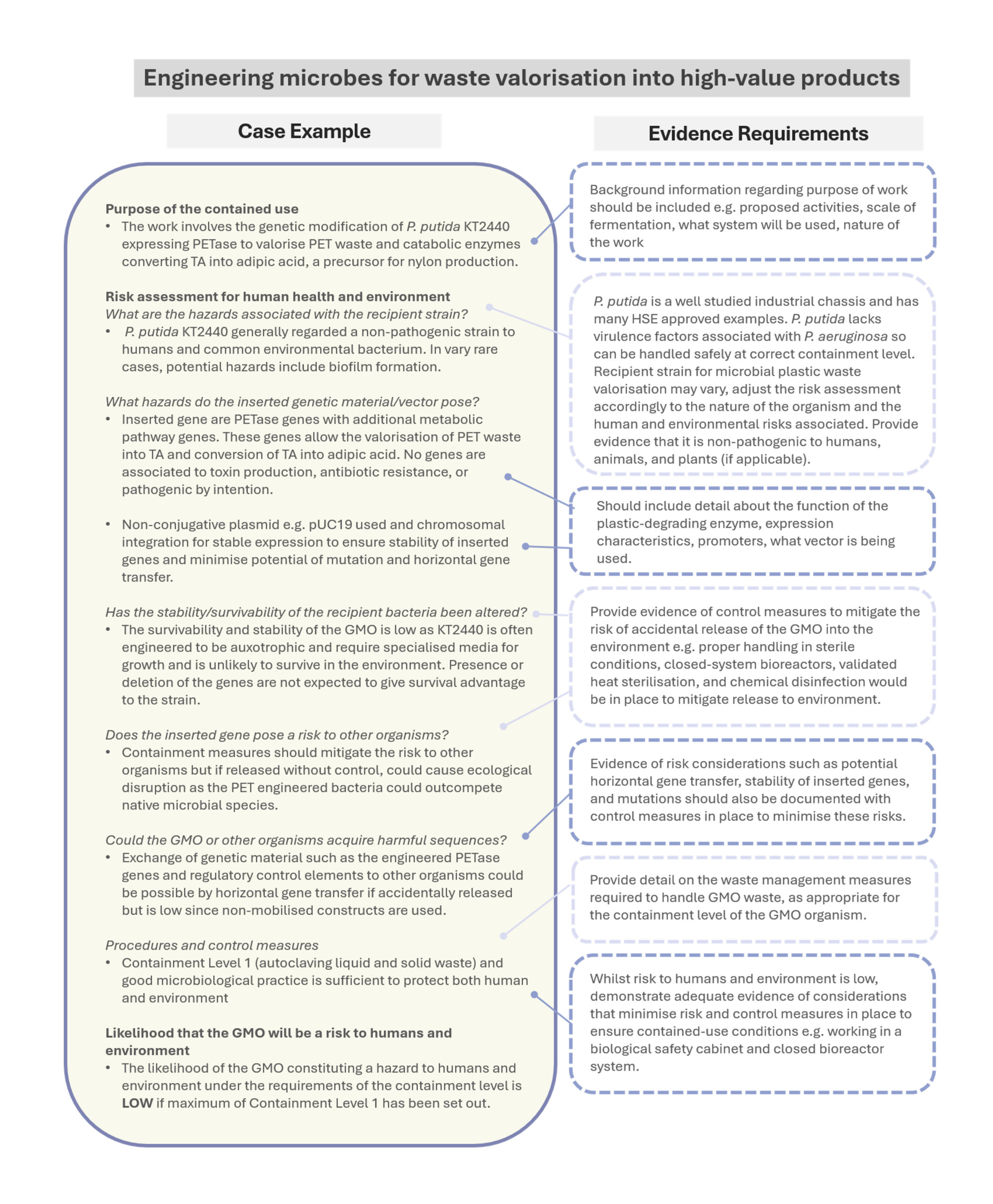
Figure 2. Example walkthrough of risk assessment and evidence requirements associated with engineered P. putida for PET waste valorisation into value-added products
Other Regulatory Requirements
Environment Agency (Environmental Permit)
- Environment Permit application for waste treatment will be required as it involves the use of plastic waste as a feedstock
- Ensure consideration of industrial emissions & waste management, processes, feedstock type and quantity, evidence of monitoring and reporting
UK REACH (HSE Chemicals Regulation Division)
- If producing ≥ 1 tonne per year legal entity, submit a dossier (IUCLID) to UK REACH and provide evidence of physico-chemical properties, human health data, environmental data, and exposure scenarios
Similar Cases
For Comparison
Carbios (France) has demonstrated successful scaling-up of enzymatic hydrolysis of PET. The bioprocesses developed by CARBIOS requires the use of GMOs, which are used for the process itself or for the production of enzymes. In accordance with Directive 2009/41/EC of May 6, 2009, GMOs used required a Class 1 confined environment. To minimise risks of releasing the GMOs into the natural environment, they demonstrated the GMOs are destroyed at the end of the production phase by thermochemical means.
Epoch Biodesign (UK) have developed a solution to tackle the recycling of waste plastic through innovative enzyme engineering. The company uses AI to engineer and optimise enzymes involved in depolymerising nylon into its initial monomers for nylon recycling. The optimised enzymes are likely to be expressed into a microbial chassis. Based on current information, Epoch Biodesign are at TRL4-6 and would be considering market regulatory pathways.
For Contrast
Blue Cycle (Netherlands) aimed to convert plastic waste into oil. The company went bankrupt in 2024 due to high costs but also community backlash as residents residing near the plant filed numerous environmental complaints over odours. Environmental compliance and emission management was not well established, leading to the community and environmental scrutiny.
Visit the EBIC Website: https://ebicentre.co.uk/
Disclaimer: This document is for information purposes only and provides general guidance about the process of applying for and securing approval for the use of Genetically Modified Organisms. The guidance is not intended to constitute advice in relation to any specific case. Every attempt has been made to present up to date and accurate information. We provide no warranty as to the accuracy of the information contained in this guidance and accept no liability for any loss, damage or inconvenience caused as a result of reliance on such information. We are not responsible for the content of external websites which are linked from this guidance. For administrative advice, form submissions, and general regulatory inquiries regarding GMO contained use, you can contact the HSE Notifications Officer directly via email at bioagents@hse.gov.uk or your local competent authority at https://www.gov.uk/guidance/developing-genetically-modified-organisms for feedback and more information.
Version: 1.1 Published: 10th November 2026
Note: This guidance reflects the UK regulatory framework and associated guidance in place at the time of preparation. As regulatory requirements and guidance may evolve alongside scientific and technological developments, readers should consult the relevant regulatory authorities to confirm the latest applicable requirements.