
The Problem
Soil contamination poses a significant threat to human health, agriculture, and the environment due to the presence of toxic pollutants at levels that are at risk to humans and the environment. Various activities contribute to soil contamination, with industrial activities being the biggest contributor followed by agricultural practices, poor waste disposal, accidental spills and leaks, construction and urbanisation, and untreated wastewater. Contaminants in the soil are detrimental in various ways such as reducing biodiversity, passing contaminants to higher trophic levels including humans, and contaminating drinking water. A pollutant causing serious concerns are PFAS (Per- and polyfluoroalkyl Substances) which are termed “forever chemicals” since they have carbon-fluorine bonds, making them virtually indestructible. They have been associated to increased risk of certain cancers, reproductive effects, developmental effects in children and increased interference with natural hormones.
Clean-up and restoration of already contaminated soils require accurate assessment of the type and level of contamination. Monitoring soil quality to get an accurate understanding and distribution of the contaminants present as well as having quality monitoring data is important. Current techniques to monitor soil contaminants include spectroscopic techniques such as Visible Near-Infrared Spectroscopy (Vis-NIR) and Laser-Induced Breakdown Spectroscopy (LIBS) which allows for rapid, chemical-free screening in situ. Alternatively, highly sensitive, laboratory-based techniques such as inductively coupled plasma-mass spectrometry (ICP-MS) and inductively coupled plasma-optical emission spectrometry (ICP-OES), provide precision and trace-level quantification. However, all these techniques lack real-time, on-site, and cost-effective analysis and often require technical expertise which are associated to high costs.
The EngBio Solution
A monitoring technique that is easy to use, cheap, accessible, that can be used in real-time and on-site are biosensors (Figure 1). They have become a useful analytical tool for detecting pollutants by utilising biotechnology techniques coupled with a signal transducer to detect and quantifiably measure signals. Due to the modularity of the technology, various types of biosensors have been developed including cell-free and whole-cell based biosensors, and specific and nonspecific ones. A target analyte is identified e.g. pesticide, heavy metals, pathogens, pharmaceuticals and is sensed by a bioreceptor. For cell-free biosensors, sensing elements include DNA, proteins, and aptamers. Depending on the type of target analyte, different sensing elements are more suitable. Whole-cell based biosensors can be either specific where it is based on the metabolism or detoxification genes in microorganisms or non-specific based on stress responsive genetic regulation. When the bioreceptor interacts with the analyte, a physical or chemical change occurs, which is then detected by a transducer to produce a signal e.g. electrochemical, optical, piezoelectric. The signal is often weak with background noise so the electronics in the biosensor is often optimised to amplify and filter the signal. The signals are then processed and displayed in a readable format to be analysed.
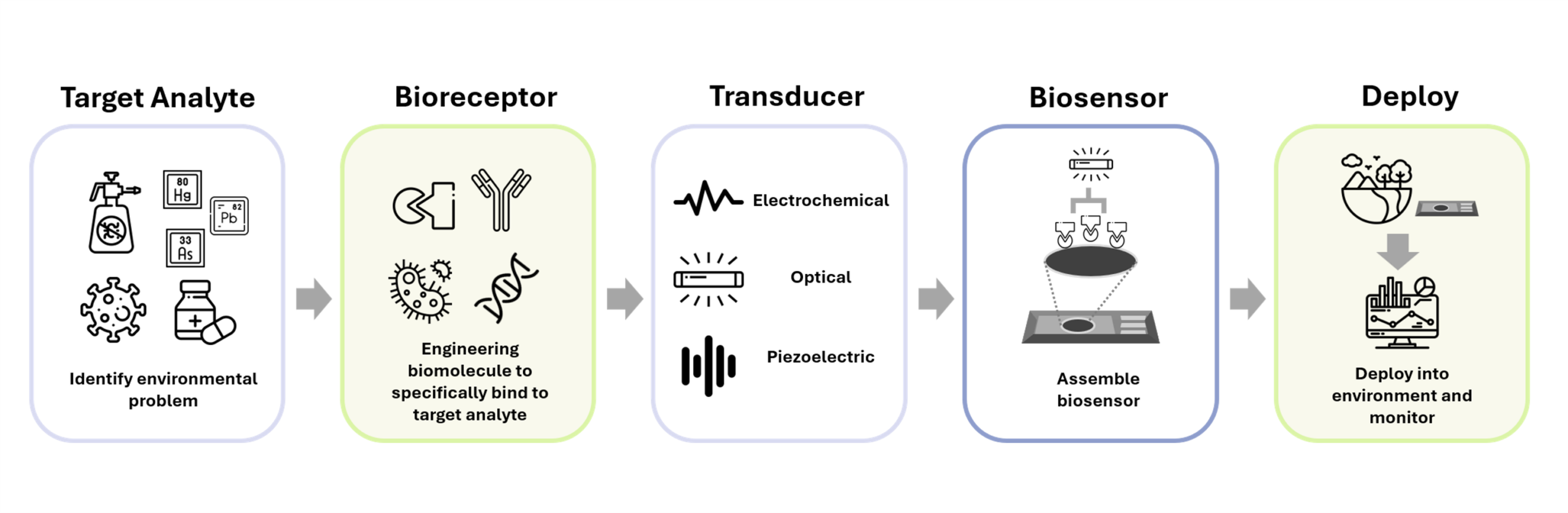
Figure 1. General process of microbial waste valorisation into value-added products
Case Assumptions
Advances in biotechnology allows engineering of whole-cell biosensors based on metabolic genes as sensing elements. Microbial whole-cell biosensors detect concentrations based on the genetic elements that respond to the target analyte, which are controlled under the promoters of the reporter genes to convert the biological response into a detectable signal such as fluorescence. Whole-cell based biosensors are more advantageous than cell-free biosensors because they are suitable for assessing the bioavailability and toxic effects. For this case study, the technology involves the development of a whole-cell biosensor by genetically engineering Rhodococcus jostii RHA1 to detect PFAS in the soil which produces a fluorescent response upon detection of PFAS.
Regulatory Pathway and Evidence Requirements
This case study only focuses on the development and production of the whole-cell biosensor, and not the deployment of environmental applications. Therefore, the case study falls under The Genetically Modified Organisms (Contained Use) Regulations 2014. A work through of risk assessment considerations associated to the engineering of a whole cell biosensor using Rhodococcus jostii to detect PFAS and produce a fluorescent signal is outlined along with evidence requirements to support the risk assessment approval pathway (Figure 2).
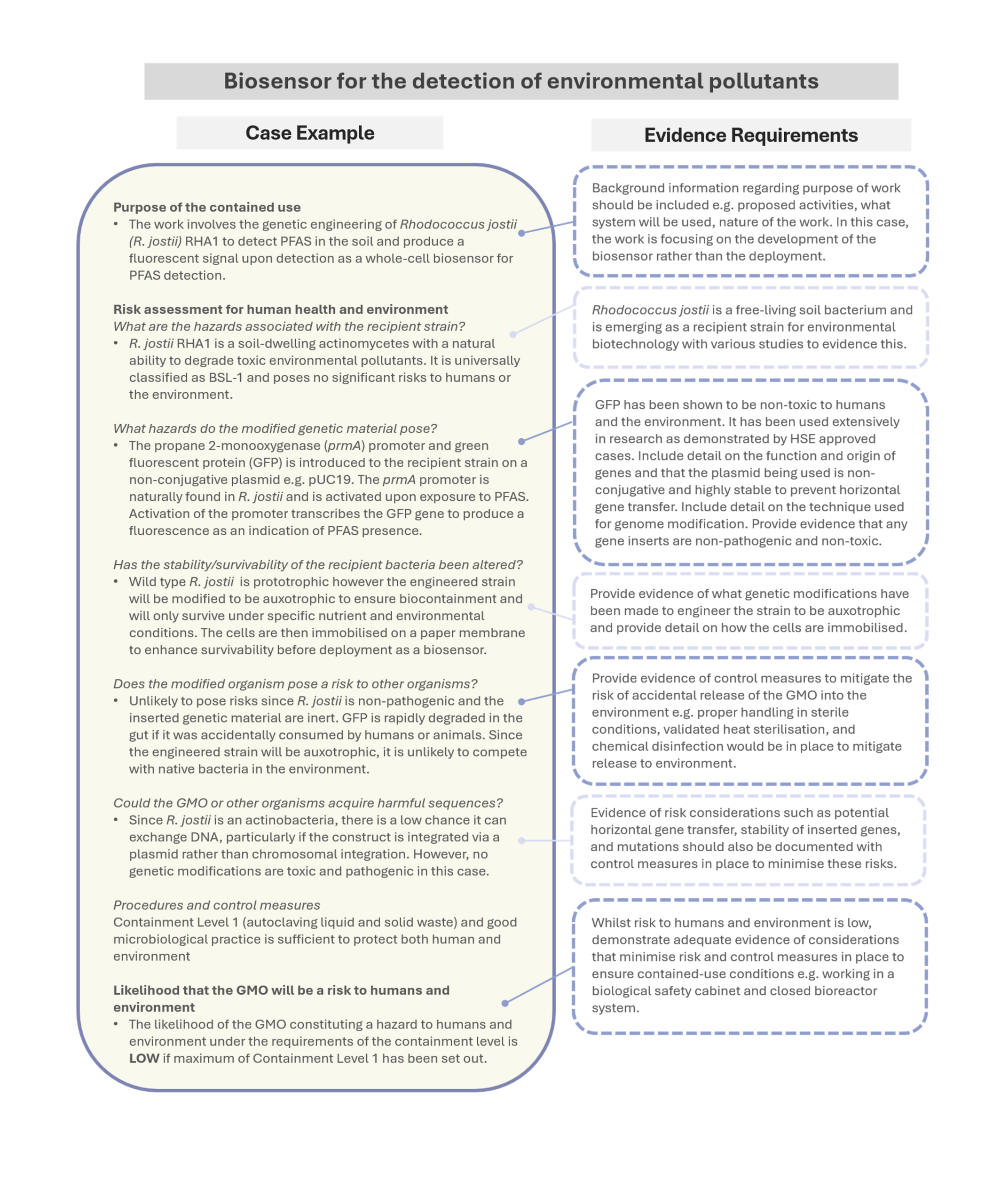
Figure 2. Example walkthrough of risk assessment and evidence requirements associated with engineered R. jostii for the production of whole-cell based biosensors for the detection of PFAS
Other Regulatory Requirements
Department for Environment, Food & Rural Affairs (DEFRA)
If biosensor is then to be deployed outside contained conditions:
The GMO (Deliberate Release) Regulations 2002 (SI 2002/2443) applies
Consent from the Secretary of State (via DEFRA) will be required
Advisory Committee on Releases to the Environment (ACRE) provides statutory advice to DEFRA on the potential risks to human health and the environment from the release of GMOs
Similar Cases
For Comparison
Oxford Molecular Biosensors (UK) have developed whole-cell biosensors using engineered bacteria to produce an optical signal which changes in the presence of toxic compounds, and changes and intensity of the light signal is relative to the overall toxicity of the sample. The company is currently developing specific biosensors to detect individual elements based on a switch-on light system using synthetic biology to increase sensitivity. The company are at TRL 7 and have demonstrated a functional prototype in an operational environment. However, the biosensors are not deployed in the environment as they operate from a molecular microbiology laboratory and test water samples within a contained laboratory to overcome hurdles associated to deliberate release regulations.
FREDsense (Canada) is a biosensor company to detect water contaminants, particularly PFAS using a bacteria-based biosensor. The genetically engineered bacteria can detect contaminants and when the target analyte is present, it binds to the biosensor and generates an electrochemical signal. The company offers a service to test PFAS in their lab, which bypasses the regulatory hurdles associated with the deployment of the biosensor in the environment.
For Contrast
Arsenic Biosensor Collaboration (UK) was a project based at Cambridge University in collaboration with colleagues from the University of Edinburgh developed a whole-cell arsenic biosensor using a strain of Bacillus subtilis which is non-hazardous to humans or the environment to detect arsenic. Genes that produce coloured pigments are engineered into the bacteria and the modified bacteria turns green when arsenic levels are safe and purple when arsenic levels are unsafe. The team proposed that the biosensor falls under “contained release” as the biosensor featured multiple physical and genetic containment measures to ensure that deployment of the biosensor in the environment would still contain the GMO. However, at the time the project faced a large degree of uncertainty regarding regulatory approval pathways as neither HSE nor DEFRA were able to make a decision on regulatory approvals related to the project.
CEXAL Ltd (UK) are a biotech company producing DNA biosensors for bacterial detection. They are developing a cell-free biosensing system to rapidly detect microorganisms in water samples. Using engineering biology, they developed oligo constructs that detects microbial DNA to produce a quantifiable signal in the presence of pathogens. By using a cell-free platform, the deployment of environmental biosensors would not fall under regulations associated to contained use and deliberate release as no living organisms are involved.
Visit the EBIC Website: https://ebicentre.co.uk/
Disclaimer: This document is for information purposes only and provides general guidance about the process of applying for and securing approval for the use of Genetically Modified Organisms. The guidance is not intended to constitute advice in relation to any specific case. Every attempt has been made to present up to date and accurate information. We provide no warranty as to the accuracy of the information contained in this guidance and accept no liability for any loss, damage or inconvenience caused as a result of reliance on such information. We are not responsible for the content of external websites which are linked from this guidance. For administrative advice, form submissions, and general regulatory inquiries regarding GMO contained use, you can contact the HSE Notifications Officer directly via email at bioagents@hse.gov.uk or your local competent authority at https://www.gov.uk/guidance/developing-genetically-modified-organisms for feedback and more information.
Version: 1.1 Published: 10th November 2026
Note: This guidance reflects the UK regulatory framework and associated guidance in place at the time of preparation. As regulatory requirements and guidance may evolve alongside scientific and technological developments, readers should consult the relevant regulatory authorities to confirm the latest applicable requirements.