
The Problem
Water is an indispensable resource, supporting lives and livelihoods as well as ecosystems. Contamination of natural water bodies is a global issue, driven by the rapid growth of economies, unrestrained pollution discharge, the manufacturing and use of hazardous chemicals, as well as microbiological and viral infectious agents. Efforts to mitigate the impact of contaminated waters involve efforts to both prevent pollutants from entering the natural water environment and adequately treat water for societal use – be that municipal, recreational, industrial, or agricultural.
Wastewater treatment plants (WWTP) are designed to remove pollutants from industrial or municipal sources before they can enter natural water bodies. WWTPs involve three main types of process: primary treatment involving screening and settling of solids, secondary treatment involving biological breakdown, and tertiary treatment involving final processing. However, the need for more efficient and sustainable treatment processes coupled with tighter limits on discharged water quality mean that traditional wastewater treatment methods struggle to achieve the pollution removal levels required. Many of the novel chemical and physical methods involved in wastewater treatment are expensive, complicated to set up, and require high maintenance. In addition, the increased use of chemicals creates significant sludge management challenges. Many industrial manufacturing sites will operate their own wastewater treatment plan in order to pre-treat effluent prior to discharge into the public sewer system.
The EngBio Solution
Microbes have been used as a biological treatment to remove contaminants from wastewater, either as a pure or mixed microbial culture, for many years. The most common biological treatment process is activated sludge, which consists of bacteria and protozoa under aerobic conditions which use organic material in the sludge as food. However, traditional biological methods are struggling to completely break down organic pollutants and have limited suitability for some contaminants. Researchers have investigated using engineering biology to produce tailored microbes that efficiently remove pollutants like microplastics, hydrocarbons, metals and oils from water as an innovative solution to reduce the need for chemical dosing at WWTPs (Figure 1). Whilst traditional chemical and physical treatment methods are a one-size-fits-all approach, using engineering biology to produce a consortium of tailored microbes, the bioremediation of wastewater can be tailored for each WWTP since each plant site displays unique chemical profiles. As such, the use of engineered microbes is a cheaper, eco-friendly, and highly specific method for addressing water contamination.
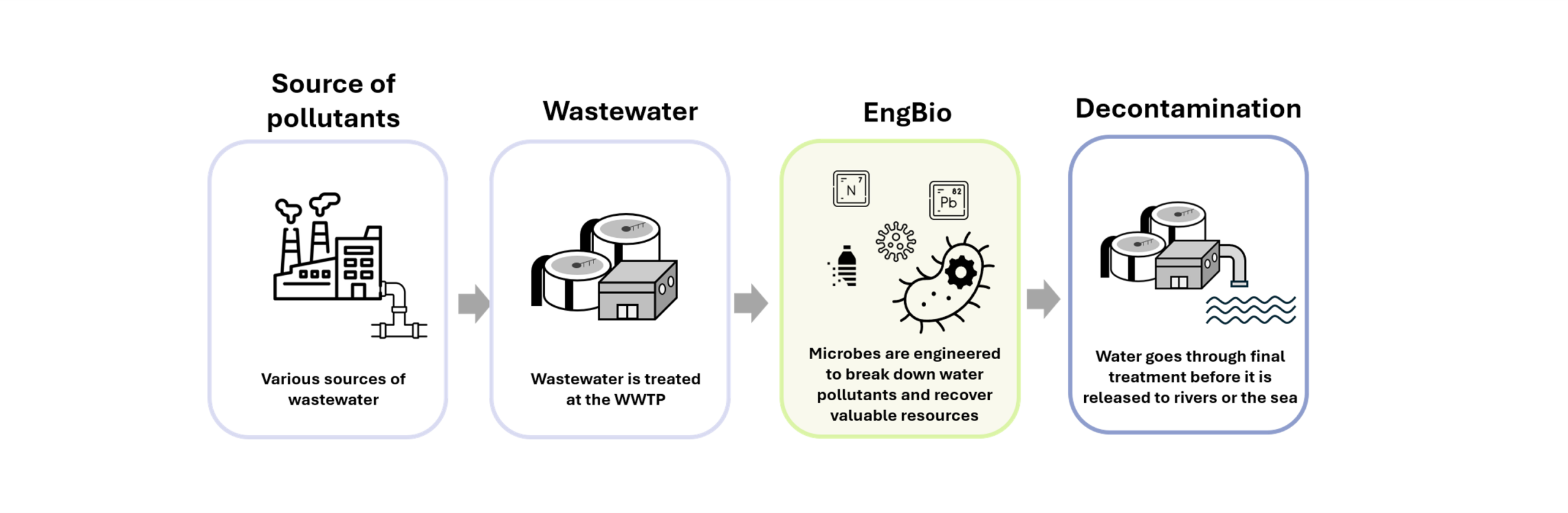
Figure 1. General process of wastewater treatment using engineered microbes for pollutant removal and resource recovery
Case Assumptions
Engineering biology to improve wastewater treatment can be achieved by genetic engineering of microbes with specific genes involved in breaking down certain pollutants found in wastewater, which can be introduced from another species or enhanced in existing bacteria. Bacillus subtilis has become a popular choice as a microbial chassis for bioremediation solutions. For this case study, Bacillus subtilis H1 is engineered overexpressing the endogenous genes nar, nir, nas, gln, and glt involved in nitrogen metabolism. The engineered microbes adhere to a moving bed biofilm reactor (MBBR) to form a biofilm to actively degrade nitrile – an organic chemical compound containing a carbon-nitrogen triple bond commonly used to manufacture synthetic rubber gloves, adhesives (e.g. super glue), and automotive seals.
Regulatory Pathway and Evidence Requirements
This case study involves the genetic modification of an engineered bacteria which would be produced under Contained Use conditions (e.g. in a laboratory or biomanufacturing setting). However, the use of the engineered bacteria for pollutant removal in a WWTP involves the bacteria being encapsulated on a membrane at a WWTP and the treated water released into the environment (e.g. a river). The engineered bacteria are thereby in direct contact with a medium which is not contained and the appropriate regulatory pathway is therefore The Genetically Modified Organisms (Deliberate Release) Regulations 2019. A work through of risk assessment considerations associated to the remediation of nitrile from wastewater using an engineered Bacillus species is outlined along with evidence requirements to support the risk assessment approval pathway (Figure 2).
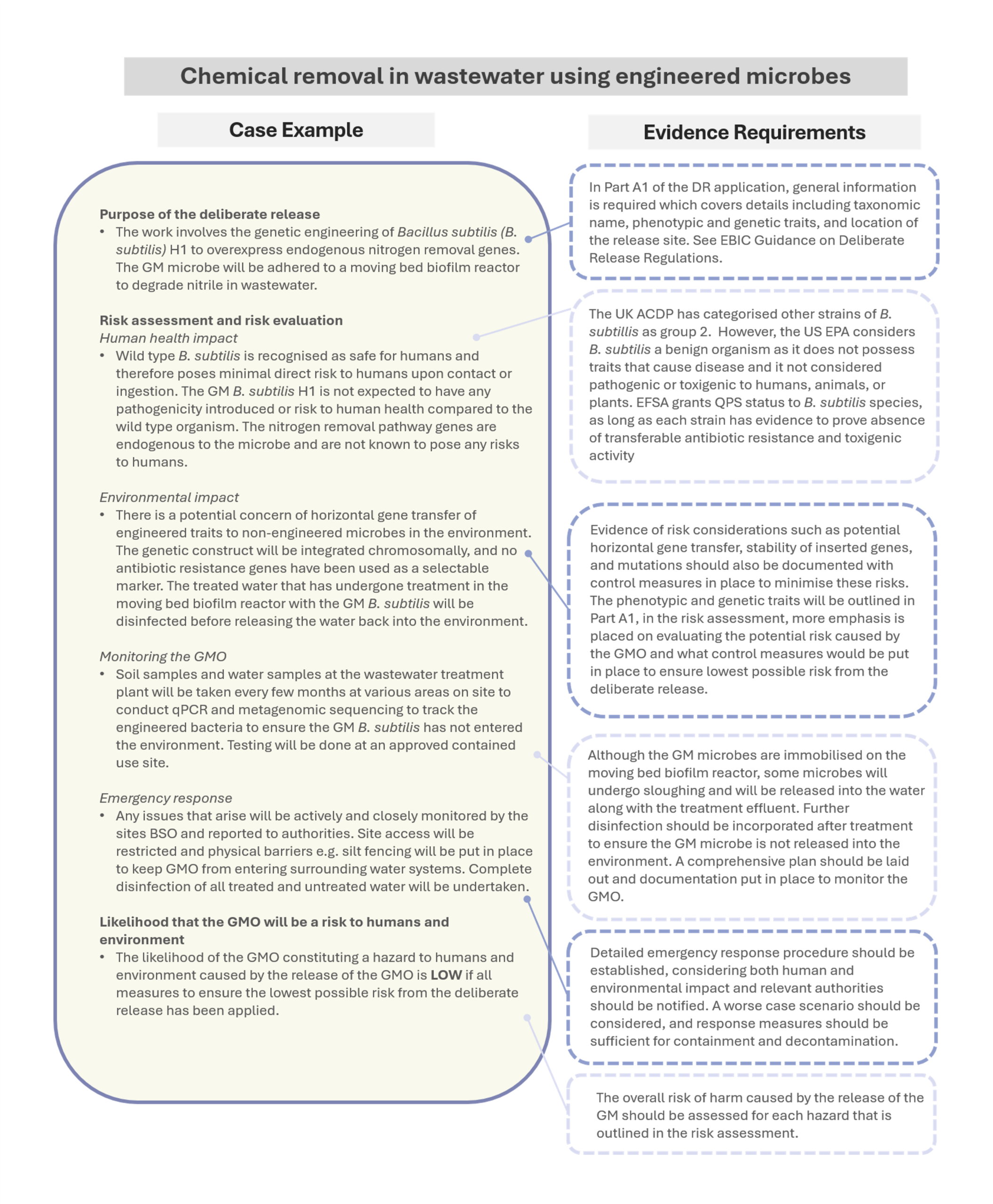
Figure 2. Example walkthrough of risk assessment and evidence requirements associated with engineered Bacillus subtilis to remove nitrile from wastewater at a wastewater treatment plant
Other Regulatory Requirements
Environmental Protection Act 1990
- Part VI: Governing of GMOs, with established legal framework for risk assessments, public notifications, and consents required to import, acquire, release or market GMOs, ensuring that human-controlled organisms do not escape or cause damage to the environment
- Part IIA: Contaminated land legislation is required for working on a contaminated site
- The Environmental Permitting (England and Wales) Regulations 2016: a discharge permit may need to be varied or amended to account for the GMO, depending on how the organism is used and whether it can be discharged with the effluent
- The Water Environment (Water Framework Directive) (England and Wales) Regulations 2017: protects receiving waters and requires evidence that discharges will not adversely affect aquatic ecosystems
Similar Cases
For Comparison
Microvi (USA) have developed an encapsulated platform which uses both natural and engineered nitrifying microbes that are encapsulated inside a proprietary structure which can be deployed in WWTP reactors to remove various pollutants including ammonia.
For Contrast
Bio2pure (UK) is a biotechnology company that produces a “starter strain” for wastewater treatment. They use naturally occurring probiotic bacteria which they grow under conditions that allow the bacteria to adapt to the pollutant and use the pollutant as a carbon source. Since the microbes they use in their technology are naturally occurring, they are able to avoid the GMO approval route.
Visit the EBIC Website: https://ebicentre.co.uk/
Disclaimer: This document is for information purposes only and provides general guidance about the process of applying for and securing approval for the use of Genetically Modified Organisms. The guidance is not intended to constitute advice in relation to any specific case. Every attempt has been made to present up to date and accurate information. We provide no warranty as to the accuracy of the information contained in this guidance and accept no liability for any loss, damage or inconvenience caused as a result of reliance on such information. We are not responsible for the content of external websites which are linked from this guidance. For administrative advice, form submissions, and general regulatory inquiries regarding GMO contained use, you can contact the HSE Notifications Officer directly via email at bioagents@hse.gov.uk or your local competent authority at https://www.gov.uk/guidance/developing-genetically-modified-organisms for feedback and more information.
Version: 1.1 Published: 10th November 2026
Note: This guidance reflects the UK regulatory framework and associated guidance in place at the time of preparation. As regulatory requirements and guidance may evolve alongside scientific and technological developments, readers should consult the relevant regulatory authorities to confirm the latest applicable requirements.