
Fossil fuels still meet approximately 80% of the world energy needs. The continued reliance on fuels such as coal, oil and natural gas is a major contributor to environmental pollution and climate change. Fossil fuels are finite resources, and their extraction, processing and combustion generate significant greenhouse gas emissions, particularly carbon dioxide, which contributes to global warming. Their use also contributes to air pollution through the release of particulate matter, nitrogen oxides, sulphur oxides and other pollutants, which can adversely affect human health and ecosystems. Fossil fuel combustion was projected at 38.1 billion tonnes of fossil CO2 emissions in 2025 and it is projected that CO2 emissions from petroleum fuels could rise by 80% by 2030.
Increasing global energy demand, driven by population growth and industrialisation, is placing further pressure on finite fossil fuel resources and highlighting the need for alternative, more sustainable sources of energy and fuels. Biofuels produced from biological resources provide one potential alternative, offering opportunities to reduce dependence on fossil-derived fuels while potentially lowering lifecycle greenhouse gas emissions and contributing to a more circular and sustainable energy system. Emissions from burning biofuels also contain less net CO2 due to the carbon sequestration that occurs during biomass maturation. There have been increased efforts to move towards the production of biofuels. Four distinct generations of biofuel production have emerged each characterised by a specific feedstock type. First generation biofuels were produced from food crops e.g. sugarcane, corn, and vegetable oils. However, this production method was often criticised due to conflict with land allocation and food production problems. As a result, a second generation of biofuels used microbes and non-edible crops as a more environmentally friendly approach and has been shown to outperform traditional biofuel production in terms of environmental impact. The third generation of biofuels used microalgae as they generate more biomass and oil content than conventional crops. This generation of biofuels is considered to resolve the dilemma of food versus fuel as it does not rely on agricultural land use. The fourth generation of biofuels uses genetically engineered microorganisms, plants, and advanced synthetic biology systems. Genetic modification enhances organisms’ biofuel production potential by improving sugar utilisation, higher lipid synthesis, and increased photosynthesis.
The EngBio Solution
Constraints on land use for biofuel production have made fourth generation biofuels utilising engineering biology techniques a promising alternative to fossil fuels (Figure 1). It encompasses genetic engineering to increase desired traits of organisms used in biofuel production. This can be achieved by either engineering pathways in native producers or reconstructing pathways from natural producers into model organisms including bacteria, yeast, and algae. Engineering biology allows metabolic pathways to be improved to produce next generation biofuels including butanol, isopropanol, and hydrocarbons that are typically liquid fuel so are similar to petroleum products, which are better fit with existing fuel systems and networks than first and second generation biofuels.
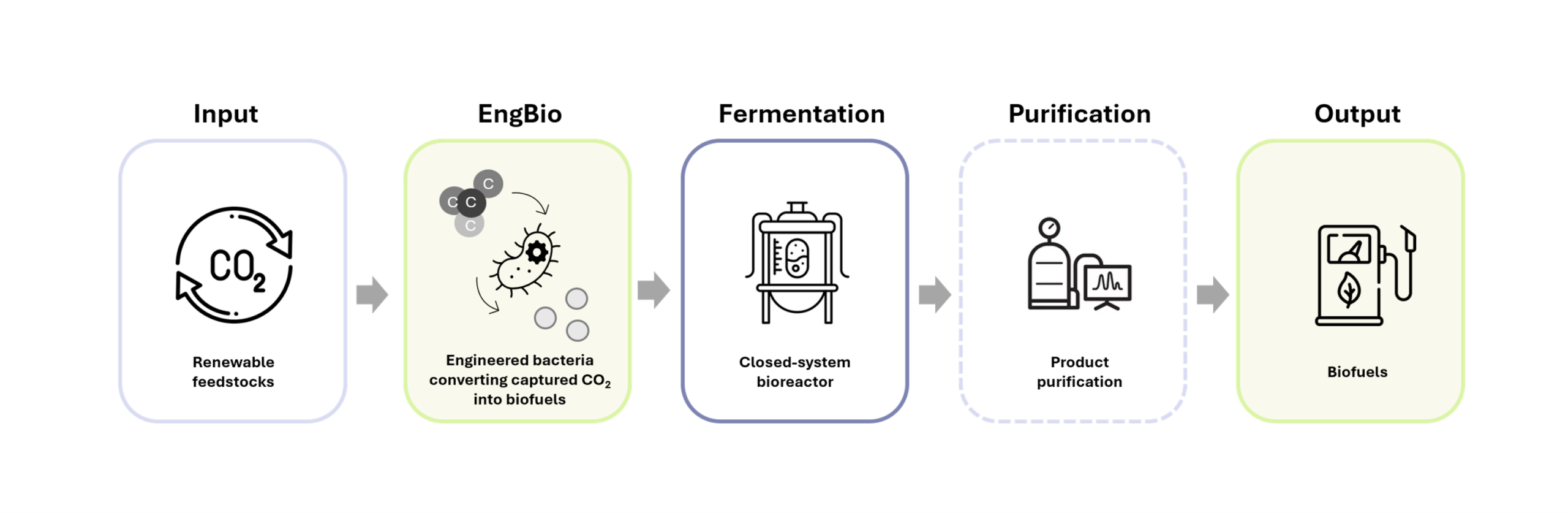
Figure 1. Fourth-generation biofuel production using engineered bacteria
Case Assumptions
Using microalgae for biofuel production combines concepts from third and fourth generation biofuel developments. Microalgae has low input and high yield prospects, a smaller carbon footprint than first-generation energy crops and a fast growth rate whilst having high lipid accumulation rates and low carbon dioxide emissions. Microalgae can also grow in wastewater, meaning they can be used to treat effluent whilst simultaneously producing biofuels. Genetic engineering of microalgae by overexpression of enzymes involved in lipid synthesis and storage have been explored to improve biofuel production. Overexpression of acetyl-CoA carboxylase (ACCase) which is involved in fatty acid synthesis and knockout of genes involved in fatty acid oxidation e.g. acyl CoA oxidase and acyl CoA synthase, can increase lipid synthesis. For this case study, the technology involves engineering the microalgae Chlamydomonas reinhardtii for biodiesel production by overexpression on the triacylglycerols (TAGs) metabolic gene type 2 diacylglycerol acyltransferases (DGATs) to increase lipid content.
Regulatory Pathway and Evidence Requirements
This case study involves the use of a closed-system photobioreactor under conditions that limit contact of the GMO with humans and the environment. Therefore, the case study falls under The Genetically Modified Organisms (Contained Use) Regulations 2014. A work through of the risk assessment considerations associated with the engineering of a microalgae to enhance production of biofuels is outlined with evidence requirements to support the risk assessment approval pathway (Figure 2).
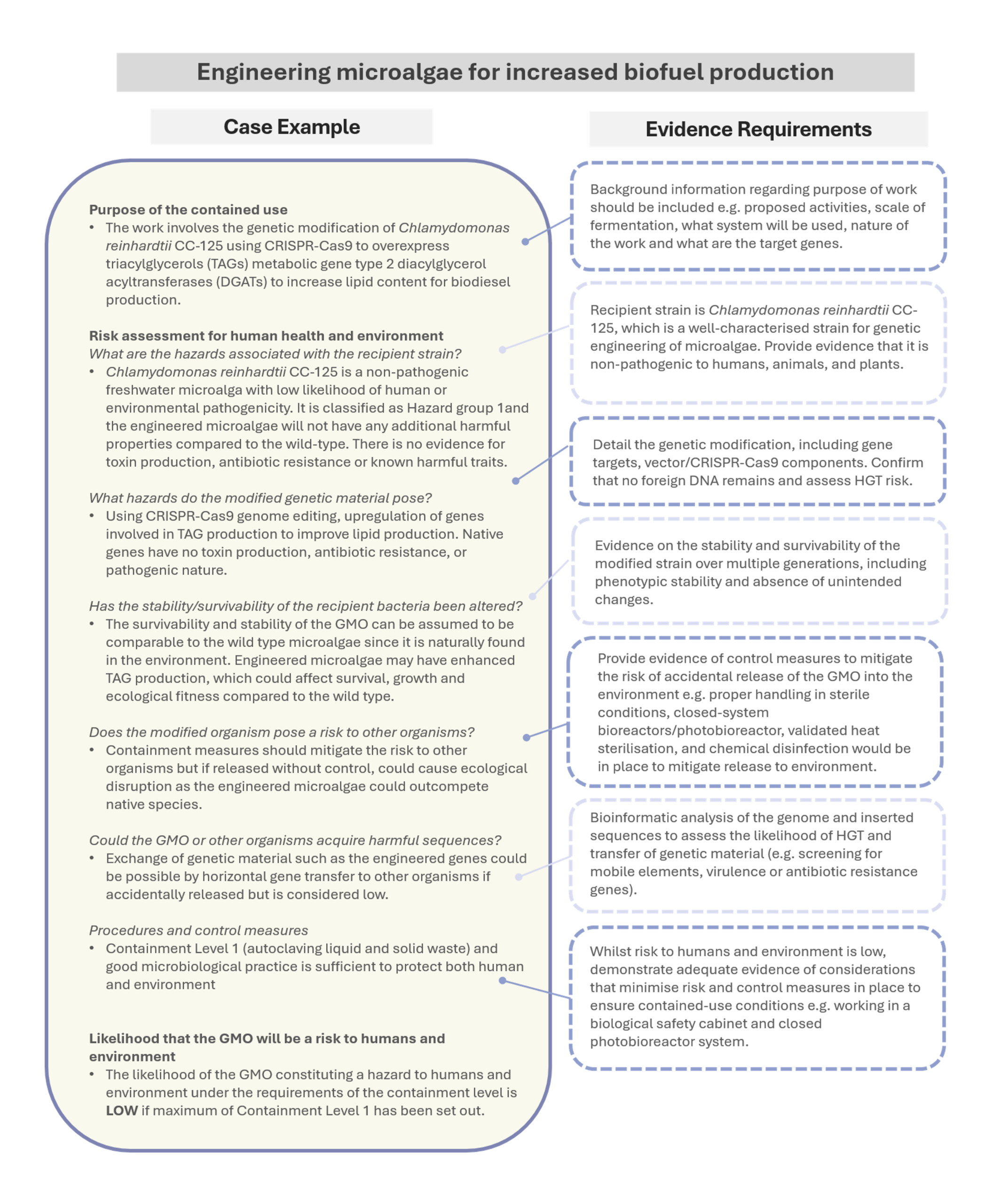
Figure 2. Example walkthrough of risk assessment and evidence requirements associated with engineered C. reinhardtii CC-125 for the production of biodiesel
Other Regulatory Requirements
Table of Contents
- The EngBio Solution
- Case Assumptions
- Regulatory Pathway and Evidence Requirements
- Other Regulatory Requirements
- Similar Cases
- IWA Word Game – Terms & Conditions
- IWA Win a place on a CWSI Short Course – Terms & Conditions
- Purpose of this guidance document
- Definition of Deliberate Release
- UK Regulatory Framework
- Approval Pathway: Step-by Step Guidance
- Information required for consent to release a GMO – organisms other than a higher plant
- Risk Assessment Methodology
- Pilot-Scale Upstream Bioprocessing: 300L Bioreactor training FLEXBIO, Heriot-Watt University, Edinburgh 2026
- Further Attendee Feedback:
- Crossing Disciplines: Reflections from a Synthetic Biology Conference
- If using CO2 as a feedstock, the technology falls under Carbon Capture, Usage, and Storage (CCUS)
- Obtain environmental permit for this technology
- See Post-combustion carbon dioxide capture: emerging techniques – GOV.UK for more information
UK REACH (HSE Chemicals Regulation Division)
- If producing ≥ 1 tonne per year legal entity, submit a dossier (IUCLID) to UK REACH and provide evidence of physico-chemical properties, human health data, environmental data, and exposure scenarios
Similar Cases
For Comparison
Phycobloom (UK) are genetically engineering algae to produce oil, as a cheap, carbon-neutral bio-oil to replace petrochemicals, particularly those used in aviation and maritime shipping. Their technology is different to other biofuel companies as the engineered algae can continuously secrete oil outside of their cells, which eliminates the need to extract the oil from inside the cell which is expensive and energy intensive, reducing their overall CAPEX. As the algae does not have to be killed to harvest the oil, the engineered algae can be kept alive and continuously reused, reducing the overall cost.
LanzaTech (UK) are converting industrial emissions, carbon dioxide, and gasified waste into ethanol. They have engineered Clostridium autoethanogenum to convert carbon oxide gases into ethanol. The company are developing new microbial strains to convert carbon gases into other critical molecules to expand their product portfolio, which has led to their success commercially and technologically. Although the company have been successful in securing funding from worldwide investors, high costs associated to scaling up may result in some drawback.
For Contrast
TMO Renewables (UK) engineered a thermo-tolerant bacteria that can digest plant sugars rapidly at high temperatures. They engineered it to convert household waste and cellulosic material into ethanol. The process involved a pre-treatment to break down non-food organic waste into separate cellulose fibres. The treated material was then converted into simple sugars using enzymes that can be consumed by the engineered microbe to convert the sugar into alcohol. In 2010, they won a $500 million contract with the US firm Fibernight. However, in December 2013 they entered administration due to cash shortages and scaling hurdles, which required immense capital that outpaced their incoming revenue and investor support.
Visit the EBIC Website: https://ebicentre.co.uk/
Disclaimer: This document is for information purposes only and provides general guidance about the process of applying for and securing approval for the use of Genetically Modified Organisms. The guidance is not intended to constitute advice in relation to any specific case. Every attempt has been made to present up to date and accurate information. We provide no warranty as to the accuracy of the information contained in this guidance and accept no liability for any loss, damage or inconvenience caused as a result of reliance on such information. We are not responsible for the content of external websites which are linked from this guidance. For administrative advice, form submissions, and general regulatory inquiries regarding GMO contained use, you can contact the HSE Notifications Officer directly via email at bioagents@hse.gov.uk or your local competent authority at https://www.gov.uk/guidance/developing-genetically-modified-organisms for feedback and more information.
Version: 1.1 Published: 10th November 2026
Note: This guidance reflects the UK regulatory framework and associated guidance in place at the time of preparation. As regulatory requirements and guidance may evolve alongside scientific and technological developments, readers should consult the relevant regulatory authorities to confirm the latest applicable requirements.