
Purpose of this guidance document
Under the UK Genetically Modified Organisms (Contained Use) Regulations 2014, all facilities working with genetically modified microorganisms (GMMs) must ensure that contaminated material and waste are managed to prevent exposure to humans and the environment. This guidance document outlines suggested inactivation techniques and disposal methods for waste arising from work with GMMs, specifically for Class 1 and Class 2 GMMs under Contained Use activities. It also offers guidance on managing the persistence, spread, and environmental fate of the organisms intended for Deliberate Release.
Regulatory Guidance on Waste Inactivation of Contained Use Activities
For GMMs deployed under the Genetically Modified Organisms (Contained Use) Regulations 2014, risk assessments must consider the exposure of humans and the environment and determine appropriate containment measures. The Health and Safety Executive (HSE) guidance specifically treats waste and effluent as potential routes of exposure. For Contained Use, the regulations are risk-based rather than prescribing one universal inactivation technology. The appropriate inactivation technique depends on the containment classification, organism, activity and waste stream. The chosen containment measure needs to be demonstrated as being effective for the specific GMM being used. As part of Regulation 5 risk assessment of contained use involving micro-organisms, the risk assessment must take full account of all aspects of the planned work, including handling, transport, work area decontamination, inactivation of GMMs, disposal and waste management including where waste contractors are used. The HSE should be notified of all work including waste disposal and management. The general approach for waste inactivation of GMMs under Contained Use is outlined in Figure 1.
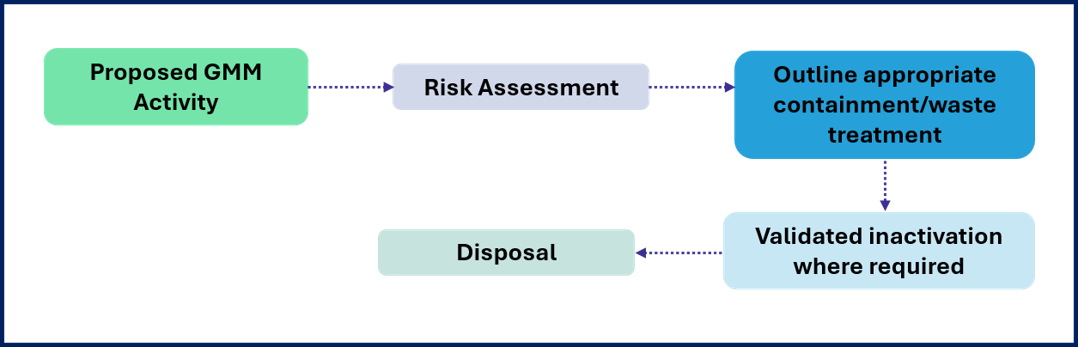
Figure 1. General regulatory approach for waste inactivation of GMMs used under Contained Use
Table of Contents
When must GM waste be inactivated?
For Contained Use activities, there are variations in the requirements for inactivation depending on the class of the Contained Use activity as summarised in Table 1.
Table 1: Requirements for inactivation of genetically modified microorganisms in contaminated material and waste by Contained Use class in laboratories
| Contained Use Class | Waste Inactivation Requirement |
|---|---|
| Class 1 | Required by validated means where and to the extent the risk assessment shows it is required |
| Class 2 | Required by validated means |
| Class 3 | Required by validated means, with waste inactivated within the laboratory suite |
| Class 4 | Required by validated means, with waste inactivated within the laboratory |
Class 1 Contained Use
For Class 1 activities, waste does not automatically require inactivation; however, the risk assessment should determine and document whether it is necessary. Inactivation may be omitted only if all the following conditions are met:
The GM organism has no potential to cause harm to human health or the environment
The GM organism is biologically contained e.g. multiple disabling mutations or auxotrophy as restrictive nutrient requirements cannot be met outside the laboratory
It cannot establish or multiply outside the laboratory
It cannot transfer its genetic material to other microorganisms e.g. non-mobilisable plasmids
If all four conditions are met, the GM waste can be removed directly off site and does not require inactivation. If any of these conditions are not met, waste should be inactivated before disposal.
Class 2, 3, and 4 Contained Use
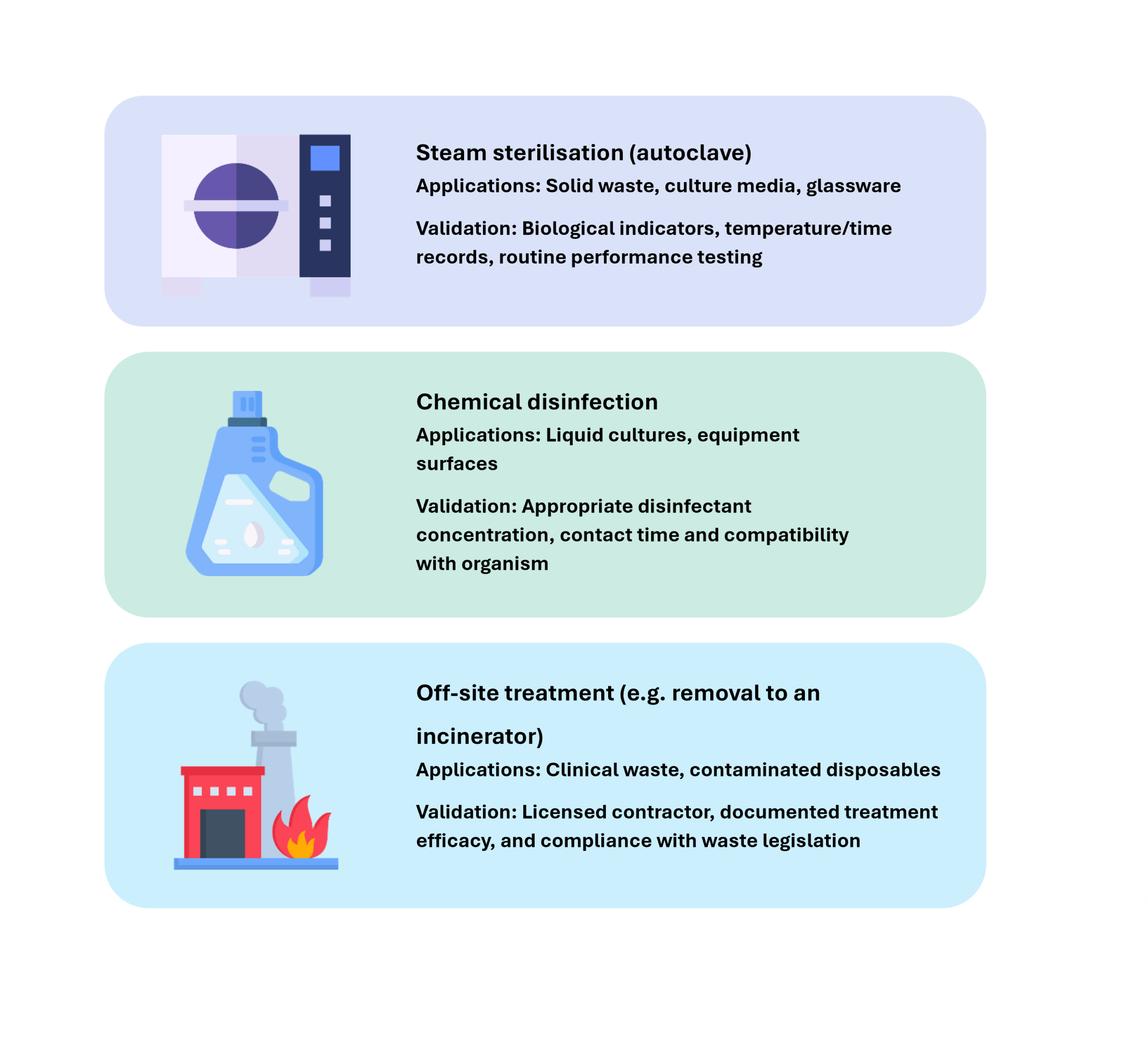
For all Class 2-4 activities, contaminated waste must be inactivated using a validated method before disposal. Validated techniques include autoclaving, chemical disinfection and off-site treatment which are further discussed in the validated inactivation section below. The types of waste that require inactivation are outlined in Figure 2.
Types of waste requiring consideration
Contained Use risk assessments should address all waste streams generated by the Contained Use activity. Examples of the types of waste requiring inactivation consideration are shown in Figure 2.
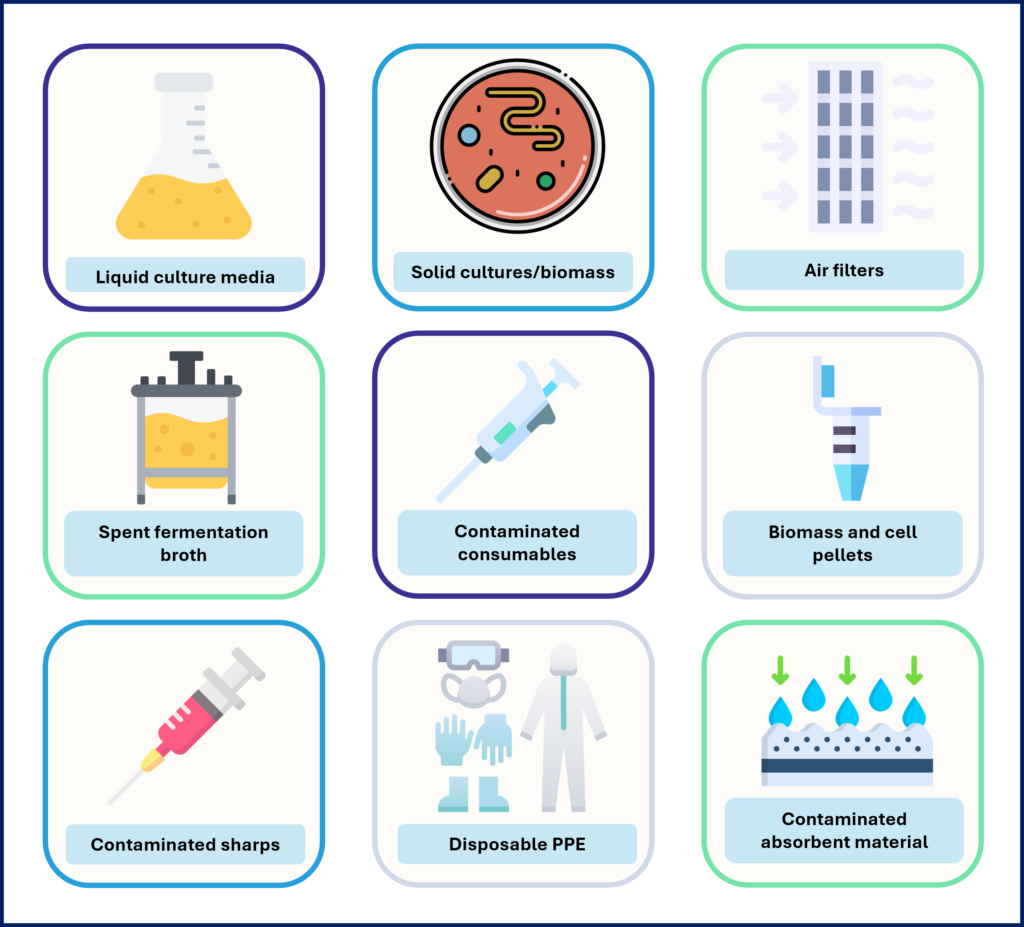
Figure 2. Examples of GM waste streams requiring assessment for inactivation
Inactivation Techniques
Where required, GMM waste must be inactivated before disposal. Various inactivation techniques have been tested by researchers as summarised in Figure 3. There are no approved techniques, only validated techniques based on evidence. The chosen technique should be suitable for the GMM and the activity.
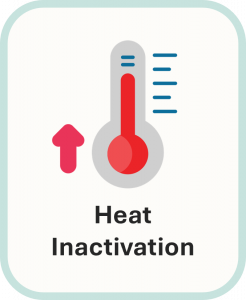
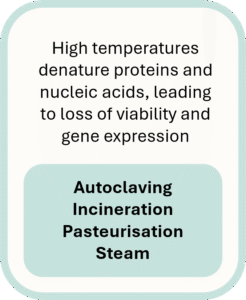
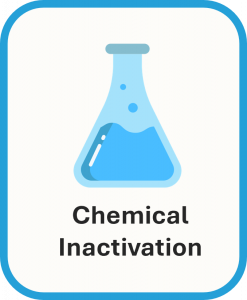
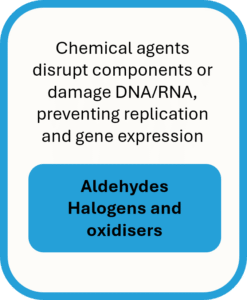

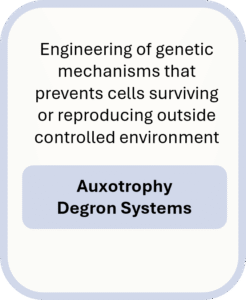
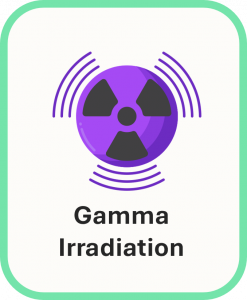
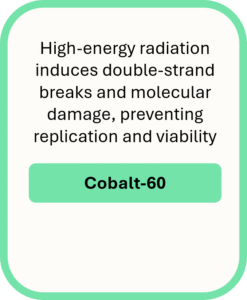
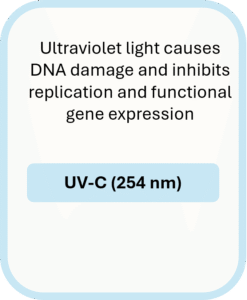
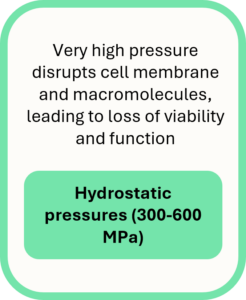
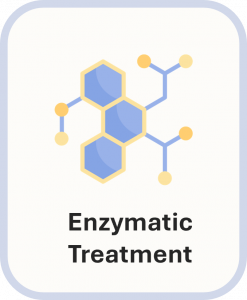
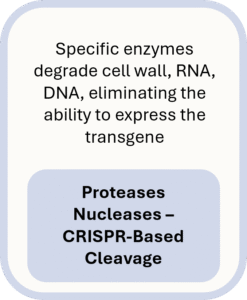
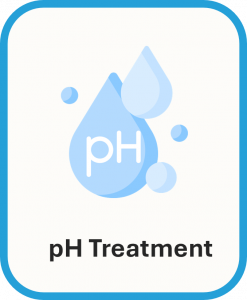
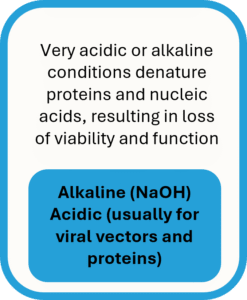
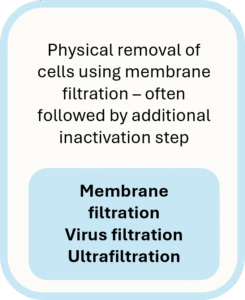
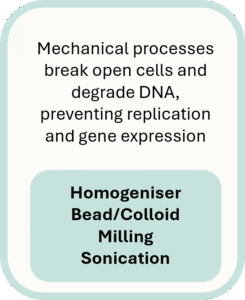
Figure 3. Different GMM inactivation techniques
Selection of an inactivation method should be based on factors including the characteristics of the GMM, the nature and volume of the waste, the composition of the waste matrix, the proposed treatment process and the potential consequences of treatment failure. The selected method should be demonstrated to be effective under the conditions in which it will be applied. Validation should take account of relevant worst-case conditions, including the characteristics and concentration of the GMM and factors within the waste matrix that could reduce treatment efficacy. Critical treatment parameters should be defined and routinely monitored, with appropriate procedures in place for treatment failure or deviation from validated conditions. The factors to consider are summarised in Table 2.
Table 2: Key factors to consider when selecting a GMM inactivation method
| Factor | What should be considered? |
|---|---|
| Properties of the GMM | Susceptibility to heat, chemicals, radiation or other treatment; ability to survive outside its host/environment; presence of spores or other resistant forms; environmental persistence |
| Nature of the genetic modification | Whether the modification could alter survival, environmental persistence, pathogenicity, toxin production, host range or susceptibility to the proposed treatment |
| Type of waste | Liquid culture, wastewater, sludge, biomass, solid waste, contaminated PPE, filters, sharps, equipment, etc. |
| Concentration and quantity of GMM | Initial viable cell concentration and total volume/mass to be treated. High biomass loads may require different treatment conditions from small laboratory volumes |
| Composition of the waste | Organic material, proteins, suspended solids, salts, detergents, buffers and other components can interfere with chemical or thermal inactivation |
| Scale | A method validated at laboratory scale may not automatically be effective at pilot or industrial scale |
| Downstream disposal | Treatment should be considered together with what happens afterwards. Inactivation may need to occur before discharge, transport or disposal |
| Practical and occupational considerations | Worker exposure, chemical hazards, heat/pressure hazards, compatibility with equipment and materials, and the feasibility of implementing the procedure consistently |
Validated Inactivation
The Health and Safety Executive (HSE) does not explicitly require a specific inactivation technique but instead requires that the chosen method for inactivation must be a validated technique that has been demonstrated to consistently achieve the required level of inactivation for the organism and waste stream concerned. A single technique may be sufficient where the required outcome has been demonstrated. The following approaches may provide validated inactivation when their efficacy for the intended use has been demonstrated (HSE L29, paragraph 135):
The SACGM Compendium of Guidance defines validation as:
Establishing documented evidence that a disinfection process will consistently inactivate target organisms under defined conditions of use
The HSE specifically notes that disposal of waste and effluents should be considered during preparation of the risk assessment because they may provide routes for environmental exposure. For a regulatory application, evidence should be provided to cover various requirements as outlined in Table 3.
Table 3: Evidence requirements to demonstrate validated inactivation of GMM
| Requirement | What you should demonstrate |
|---|---|
| Target organism | The treatment is effective against the specific GMM |
| Waste matrix | Treatment works in the actual waste |
| Treatment parameters | Define temperature/time, chemical concentration/contact time |
| Validation | Evidence that the process reliability achieves the required level of inactivation |
| Monitoring | Parameters monitored during routine operation |
| Failure detection | How treatment failure is identified |
| Contingency | What happens to untreated waste following failure |
| Records | Treatment, maintenance, and validation records retained |
| Revalidation | Triggered following significant changes to equipment/process |
Autoclave
An autoclave does not have to be the method of inactivation used; however, access to an autoclave is required as part of the notification process. The specific requirement to ensure an autoclave is available is because it provides absolute physical sterilisation through validated steam under pressure and provides a suitable alternative should the chosen inactivation method is unavailable or unfit for purpose. Different containment levels require different autoclave arrangements (Table 4). If an autoclave is not present in the building or laboratory, a derogation must be sought from the HSE to allow Class 2-4 work to continue.
Table 4: Autoclave requirements for different laboratory containment levels
| Containment Level (CL) | Autoclave requirement |
|---|---|
| CL1 | Required on site |
| CL2 | Required in the building |
| CL3 | Required in the laboratory suite |
| CL4 | Double-ended autoclave required in the laboratory |
Chemical disinfection
Chemical disinfection can provide validated inactivation when efficacy for the intended use has been demonstrated and has the advantage of not requiring the use of a pressure vessel such as an autoclave. There are several factors to consider when planning to use disinfection for inactivation of GMMs. These include:
- Nature of the microorganism(s)
- Nature of the material being disinfected
- The presence/quantity of organic material
- Concentration of the disinfectant and contact time
- Circumstances under which disinfection is required (e.g. spillages or waste inactivation)
- Health hazards presented by the disinfectant
Off-site disposal
Off-site disposal of GM waste by a licenced contractor is a validated option for inactivation. If removing waste directly for incineration without inactivation on site, arrangements should be well documented in a risk assessment outlining measures to reduce accidental spillages and indicating what class the waste before incineration. Class 1 waste would generally be treated as offensive waste and class 2 waste would be classified as infectious waste.
If the GM waste has been inactivated through a validated technique on site before off-site disposal, it is no longer regulated under the GMO (Contained Use) Regulations and is subject to general waste legislation. However, the risk assessment should consider the most appropriate waste route following on site inactivation (if used). The user has a Duty of Care for their waste up until final destruction.
Regulatory Guidance on Waste Inactivation for Deliberate Release Activities
For GMMs deployed under the Genetically Modified Organisms (Deliberate Release) Regulations 2002, which apply in England, Scotland, and Wales under separate competent authorities (Northern Ireland is governed under a separate regulatory framework, the Genetically Modified Organisms (Deliberate Release) Regulations (Northern Ireland) 2003 (amended by the 2019 regulations), there isn’t a general provision regarding inactivation since Deliberate Release involves intentional environmental release. Therefore, regulation focuses on managing the persistence, spread, and environmental fate of the organism, rather than requiring universal sterilisation of all GM waste before disposal. Deliberate Release activities require prior approval from the relevant UK competent authority (see EBIC Guidance on Deliberate Release) and are assessed on a case-by-case basis through an environmental risk assessment (ERA). The competent authority may impose consent conditions requiring specific waste treatment or decontamination measures where these are necessary to protect human health or the environment. For a Deliberate Release activity, waste management considerations should include:
- What GMM-containing waste is generated?
- Where can viable GMM enter the environment?
- What is the concentration/quantity of viable GMM?
- What happens to the GMM during the proposed waste-treatment process?
- What evidence demonstrates effective inactivation?
- What happens if the treatment system fails?
- How are residual biomass, sludge, filters, equipment and wastewater managed?
- How is the site decommissioned at the end of the trial?
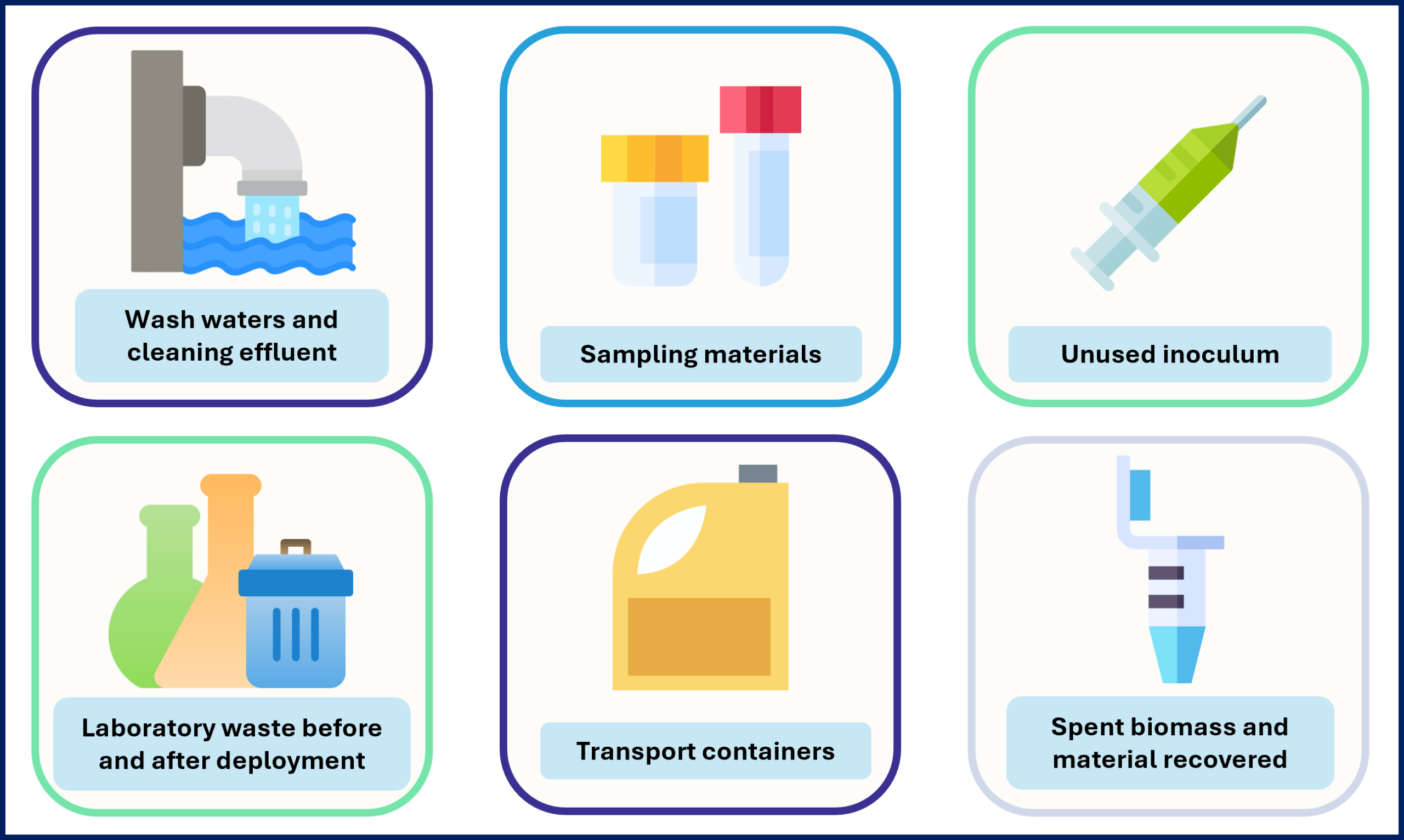
For a Deliberate Release involving GMMs, the ERA should evaluate all materials that could contain viable GM organisms including those outlined earlier in Figure 2 and additional materials that could be used in a Deliberate Release activity such as those in Figure 4.
Figure 4. Examples of additional waste streams to consider in the environmental risk assessment for Deliberate Release activities
Although no specific techniques are recommended in the Deliberate Release regulations, the applicant should inactivate GM waste as outlined in the section above on Inactivation Techniques for each waste stream. Inactivation of GM waste is used to prevent unintentional secondary releases outside the authorised release area, rather than because the Deliberate Release regulations mandate a specific inactivation method.
For Deliberate Release applications, it is important to note that whilst the authorised environmental release involves the intentional release of the GMM into a receiving environment, the management of associated waste and materials must comply with the consent conditions and environmental risk assessment. All other materials, waste and equipment that are not intended for environmental exposure are expected to be subject to inactivation, so they do not create uncontrolled releases beyond those covered in the consent.
Decommissioning at the End of Deliberate Release activity
Most Deliberate Release consents include provisions for managing the site after the Deliberate Release activity. Depending on the organism and application, these may include:
- Removal and treatment of remaining cultures or biomass
- Decontamination of equipment
- Monitoring for persistence of the GMO
- Management of contaminated soils, sediments or sludge where relevant
- Post-release surveillance to verify that the organism behaves as predicted in the ERA
Visit the EBIC Website: https://ebicentre.co.uk/
Disclaimer: This document is for information purposes only and provides general guidance about the process of applying for and securing approval for the use of Genetically Modified Organisms. The guidance is not intended to constitute advice in relation to any specific case. Every attempt has been made to present up to date and accurate information. We provide no warranty as to the accuracy of the information contained in this guidance and accept no liability for any loss, damage or inconvenience caused as a result of reliance on such information. We are not responsible for the content of external websites which are linked from this guidance. For administrative advice, form submissions, and general regulatory inquiries regarding GMO contained use, you can contact the HSE Notifications Officer directly via email at bioagents@hse.gov.uk or your local competent authority at https://www.gov.uk/guidance/developing-genetically-modified-organisms for feedback and more information.
Version: 1.1 Published: 10th November 2026
Note: This guidance reflects the UK regulatory framework and associated guidance in place at the time of preparation. As regulatory requirements and guidance may evolve alongside scientific and technological developments, readers should consult the relevant regulatory authorities to confirm the latest applicable requirements.